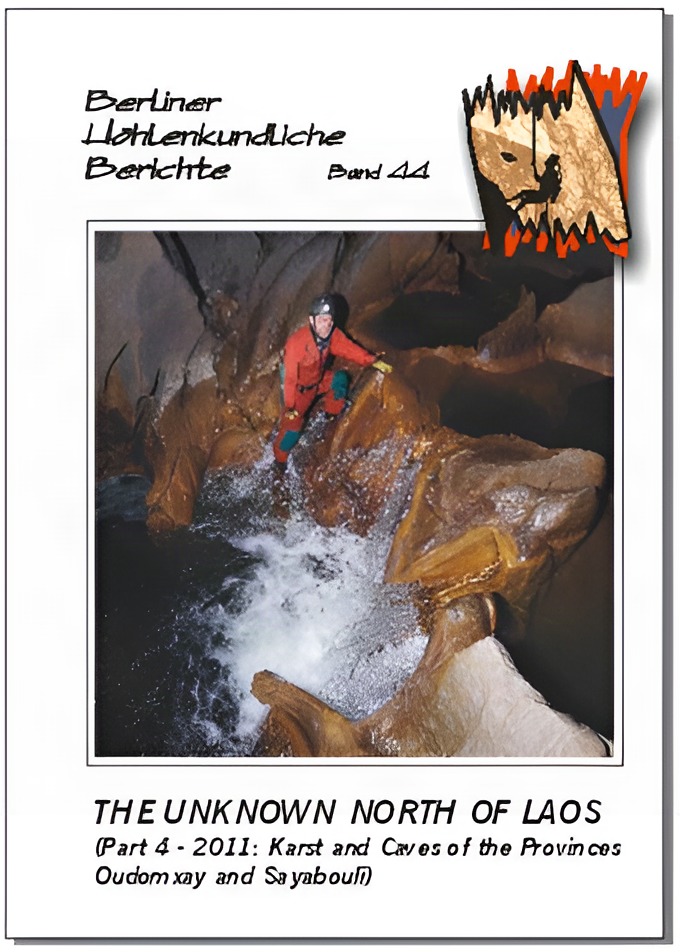
110 p., colour photo tables, many maps and surveys; Berlin 2011. Jorg Dreybrodt & Michael Laumanns (Editors). Presents the results of the 2011 international expedition to northern Laos. 11,7 km of cave passage from 16 caves. Includes final survey of the the new longest cave of northern Laos (Tham Chom Ong System), which is also the 3rd longest cave of Laos and the currently 10th longest cave of SE Asia at 17,150 metres. Three caves of Sayabouli province exceed 1 km in length, including the underground river of Tham Nam Lot (3,560 m). In English language with a German and French abstract. Before the publication of Dreybrodt & Laumanns (2005a), which sumarises the exploration conducted between 2000 and 2005, northern Laos was virtually unknown to speleologists. Only a few reconnaissance projects were conducted prior to 2000 in the province of Luang Phrabang. The afore-mentioned publication provided information on 24.3 km of cave passages from 68 caves. In the framework of the "Northern Lao-European Cave Project" (www.laoscaveproject.de) the investigations were continued in 2006-2008 (Luang Nam Tha and Houaphan provinces) (Dreybrodt & Laumanns 2008). Further findings from 2009-2010 in the Houaphan and Oudomxay provinces were published by Dreybrodt & Laumanns (2010b). This publication reports on the findings of the year 2011 (Oudomxay and Sayabouli provinces) , including the final survey of the 17,150 m long Tham Chom Ong System (Oudomxay). The cave system is the currently 3rd longest cave of Laos as well as the 10th longest cave of Southeast Asia. This report comprises descriptions of 21 caves with 11,696 km of new passages. Overall, 92 km of cave passages from 196 caves has been surveyed and published to date from northern Laos (excluding Vang Vieng and Kasi).
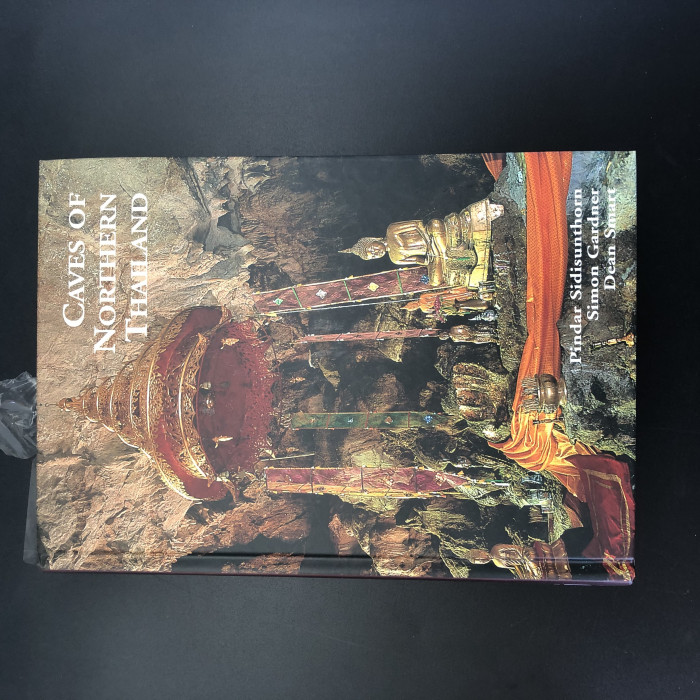
More caves have been reported in the eight northern provinces of Thailand - Mae Hong Son, Chiang Mai, Lamphun, Lampang, Chiang Rai, Phayao, Nan and Phrae - than in any other region. The most extensively surveyed area is Pang Ma Pha district in Mae Hong Son province where 176 caves have been recorded. Nevertheless many caves remain to be unexplored. Thus the 100 caves selected for this book are only a small percentage of the 2,000 or so caves in Northern Thailand. They include many of the most spectacular wild caves, the famous temple caves and archaeological sites. The book covers all aspects of caves including their geology, environment, archaeology, temples and folklore as well as giving tips on their safe exploration and photography. Author Pindar Sidisunthorn, Simon Gardner & Dean Smart. 392 pages. Hardback
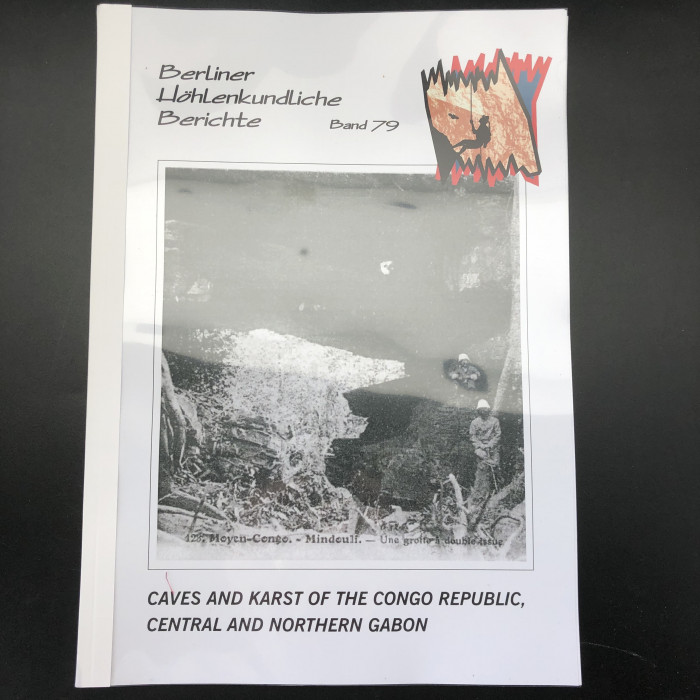
65 pp, maps & surveys; Berlin 2020. By Jean G. Shaw. An in-depth compilation of many unmapped caves in both the Congo Republic and Gabon. 177 caves described in detail. Has area maps with cave locations as well as geological, historical and biospeleological information. In English, with a German and French abstract.
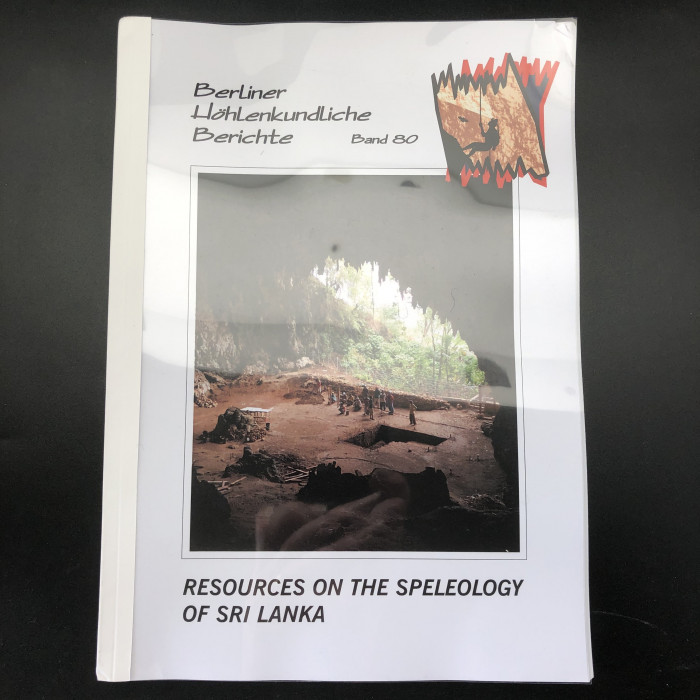
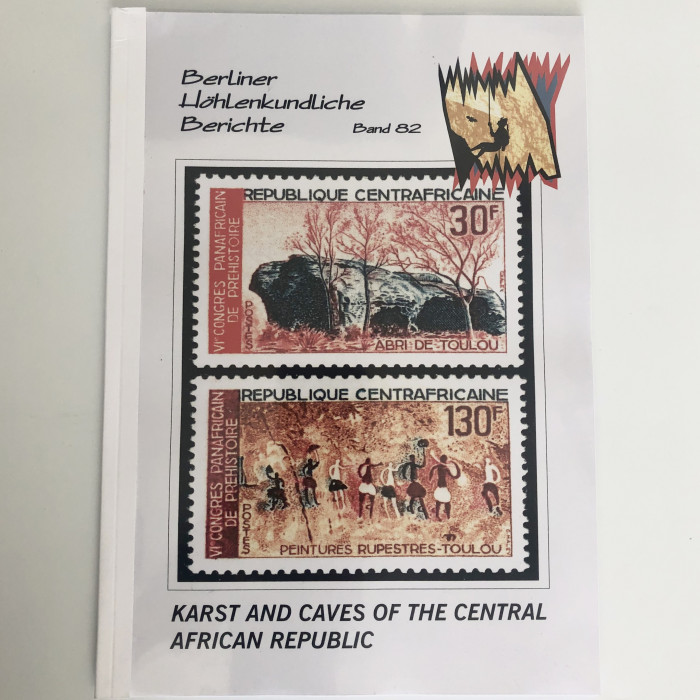
231 pp, many annotations, maps & surveys; Berlin 2020. By Herbert Daniel Gebauer. The only comprehensive source on karst and caves of Sri Lanka. Describes over 310 cave sites, most of which are not documented according to international speleological standards. In consequence, this volume is an invaluable reference for further cave exploration in this south Asian country. In English language.
68 pp, many maps & surveys; Berlin 2021. By Michael Laumanns et al. This volume covers a gap, as there was no publication so far on the caves of Taiwan. Describes over 190 cave sites, most of which are not documented according to international speleological standards. This volume resulted from an international caving expedition to Taiwan in 2020, which mapped 2,3 km of passages from 48 caves. In English language.
Rick Stanton MBE served for years as a firefighter, but it was his “hobby” of cave-diving that was his passion He has quietly spent forty years exploring caves around the world, steadily building his unique skill set as he defied limits, pushed boundaries, and discovered parts of the earth that had never been seen before. Along the way, he and his dive partners became the ones to call for the most challenging cave rescue and recovery missions. In 2018, he found himself on the world's stage when he led the team that rescued a children’s soccer team that was trapped inside Thailand's flooded Tham Luang cave. Rick needed to rely on all the experiences and friendships he'd gathered along the way, as he carefully planned and then successfully executed one of the most noteworthy rescue missions in modern history.
This book tells the enthralling inside story of the Tham Luang cave rescue in Thailand--told by the leader of the daring underwater rescue mission.
In July 2018, twelve boys and their soccer coach disappeared into the Tham Luang Cave in Thailand.
Trapped miles beneath the surface, not even the Thai Navy SEALs had the skills to bring them to safety. With the floodwater rising rapidly, time was running out.
Any hope of survival rested on Rick Stanton, a retired British firefighter with a living room full of homemade cave-diving equipment. As unlikely as it seemed, Rick and his partner, John Volanthen, were regarded as the A-team for exactly this kind of mission.
The Thai Cave Rescue was the culmination of a lifelong obsession, requiring every ounce of skill and ingenuity accumulated by Rick over a four decade pursuit of the unknown.
While the world held its breath, Rick, John, and their assembled team raced against time in the face of near impossible odds. There was simply no precedent for what they were attempting to do. . . .
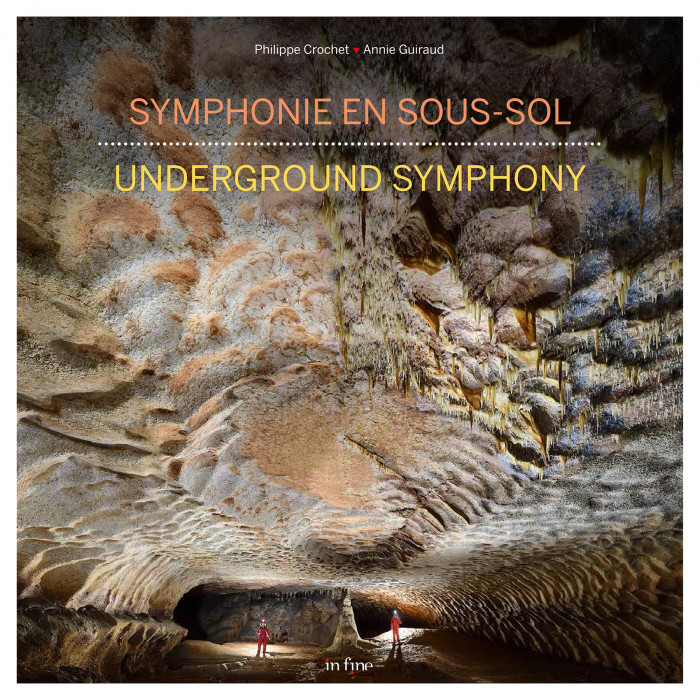
By Philippe Crochet and Annie Guiraud. This coffee table book offers a photographic journey into some of the world's most beautiful caves. The eight thematic chapters include a large number of high-quality photographs supplemented by explanatory texts in French and in English. The authors'aim is to share their passion for the underground world and pay tribute to its hidden splendors. Size : 30 cm x 30 cm (11.8 in x 11.8 in). 336 pages , weight : 4.4 lb, includes 365 color photographs. "For decades (Philippe and Annie ) have been producing world class cave images with an elegant marriage of artistic sensitivity and painstaking technique..." (Kevin Downey) "The cave photographs of Philippe Crochet and Annie Guiraud are among the best I have seen. The way they are organized and presented in these pages makes this the best cave photography book I've read." (George Veni)
43 pp, maps, photographs & surveys; Berlin 2022. Jean G. Shaw. The only complete overview on karst and caves of one of the last blank spots on the speleological world map. Describes over 40 caves and rock-shelters and many prospective sites, with references to the exploration history, archaeology, rock-art and biospeleology. In English, with a German and French abstract.
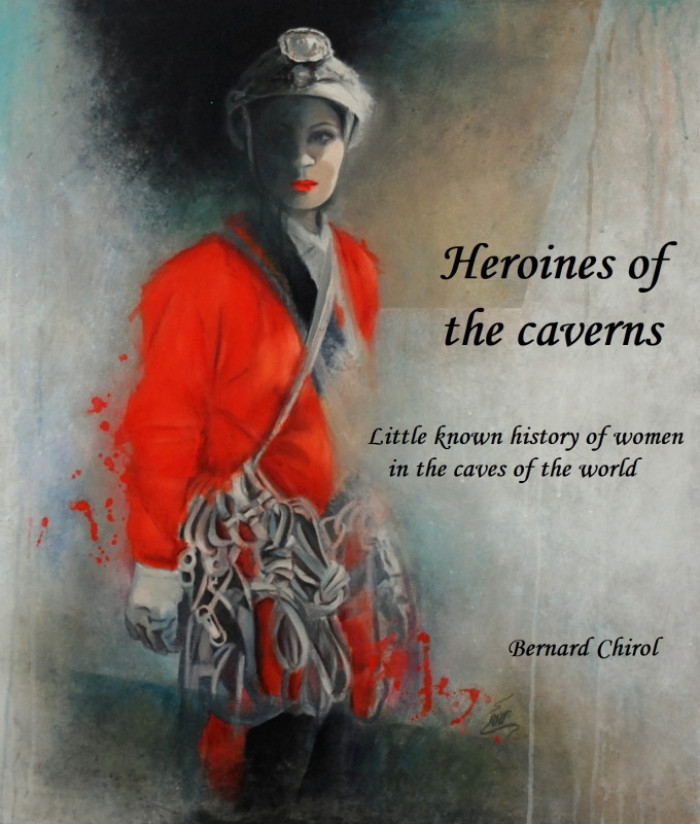
To celebrate the International Year of Caves and Karst and the great role of women in speleology. Bernard Chirol, President of the UIS Commission on History, published the book Ces Heroines des Caverns/Heroines of the Caverns - Little known history of women in the caves of the world. Speleobooks has a limited number of copies of the English language edition available. 2022. 240 pp. Paperback.
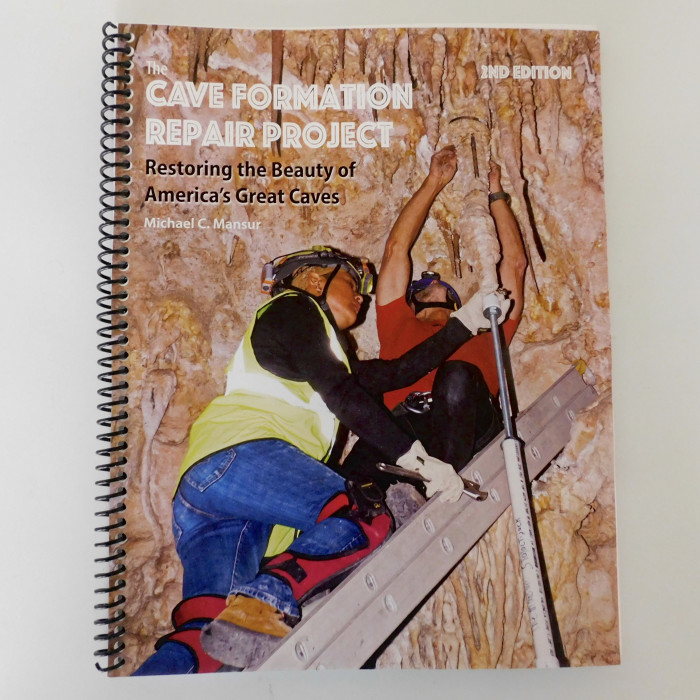
This second edition was published in May 2022, and is now available in spiral bound hard copy. 80 pp. An overview of the speleothem repair accomplished by the New Mexico-based, all-volunteer Cave Formation Repair Project from its inception in June 2018 through its third year. It also delivers step-by-step instructions for making and using the new repair tools and methods that are unique to this project. Project founder and author Mike Mansur strongly desires the techniques he and his volunteers have developed to be widely available to other cavers nationally and internationally so they might undertake formation repair work in their own local caves. In addition to informative text, each chapter features high-resolution photographs from work trips conducted by the Cave Formation Repair Project.
The author will donate $5.00, from each sale of this book to the NSS Cave Restoration Fund. The purpose of the Cave Restoration Fund is to support the repair of human-caused damage, both malicious and inadvertent. 62 pages. 2021.
The Cave Formation Repair Project: Restoring the Beauty of New Mexico’s Greatest Caves
by Michael C. Mansur (NSS #26393CL FE)
This book is designed to meet two main goals: first, to give an overview of the work accomplished by the New Mexico-based, all-volunteer Cave Formation Repair Project from its inception in June 2018 through its third year, and second, to deliver step-by-step instructions for making and using the new speleothem repair tools and methods that are unique to this project. Project founder and author Mike Mansur strongly desires the techniques he and his volunteers have developed to be widely available to other cavers nationally and internationally so they might undertake formation repair work in their own local caves.
This book is projected to be 70 pages and contains five embedded how-two videos. Each page features text blocks and captioned, high-resolution photographs from work trips conducted by the Cave Formation Repair Project.
Chapter One: How the Project Started introduces Mike Mansur, his 35-year background in cave conservation, and his impetus for initiating the Cave Formation Repair Project. Here he discusses the role federal land management agencies play in the project, the Buehler epoxy that is the central component of each repair, and his leadership philosophy about open-sourcing the knowledge gained through formation repair work to benefit caves, the caving community, and the general public.
Chapter Two: The Caves and the Formation Repairs gives an overview of the repair work conducted through the project in seven New Mexico caves. The chapter is organized by cave and displays before-and-after photos of the work accomplished at each site. Text addresses the major challenges, accomplishments, and learnings from each cave, as well as Mike’s evolution as project leader.
Chapter Three: The Tools and How to Make Them presents 10 cave-safe, PVC-based tools Mike and his volunteers have innovated to facilitate formation repairs. A list of components and step-by-step assembly instructions are given for each tool, as well as photos of each tool in use in various in-cave repair situations.
Chapter Four: New Methods and Procedures presents techniques Mike and the volunteers have pioneered that build on and expand prior approaches to effecting formation repairs. These include new ways to identify breakage and match broken pieces, improved techniques for installing reinforcement pins and stabilizing formations while epoxy cures, and camouflaging techniques for restoring the natural appearance of repaired formations.
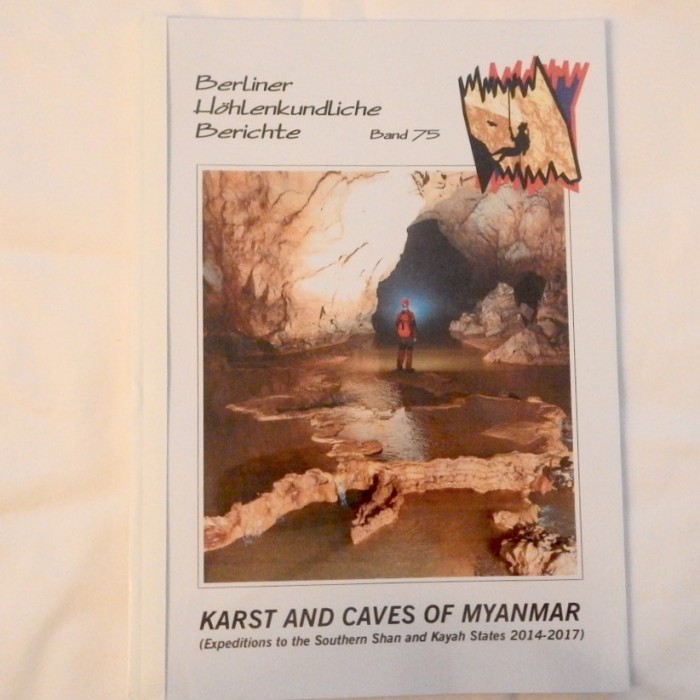
92 pp. + fold-out annexes, many cave surveys and maps; Berlin 2023. This volume provides a detailed account of the seven most recent speleological expeditions to Myanmar up till the coup d'etat in 2021, which made the country inaccessible to foreign cavers. 118 new caves are described, including Som Hein, the new longest cave of the country (at 11.8 km). The volume also includes an overview about the work on karst biodiversity and an in-depth bibliography. In English. With a German and a French abstract.
261 pp, many maps & surveys; Berlin 2022. The "Yellow Pages" on caving in the Middle East. Each country is presented in detail including topographic and karst occurrence maps as well as a description of the geological settings, the history of speleological exploration, a detailed list of the longest and deepest caves, and an in-depth bibliography. Hundreds of cave surveys and cave descriptions. Some countries also have other relevant thematic maps. In English. With German and French abstracts.
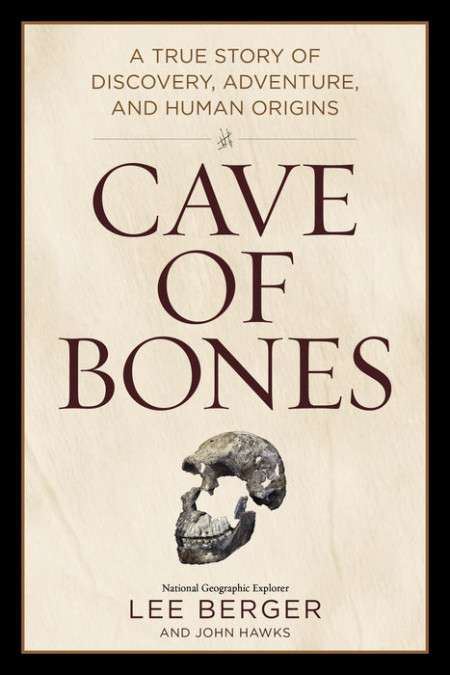
240 PP. Hard bound. A true-life scientific adventure story, this thrilling book takes the reader deep into South African caves to discover fossil remains that compel a monumental reframing of the human family tree.
In the summer of 2022, Lee Berger lost 50 pounds in order to wriggle though impossibly small openings in the Rising Star cave complex in South Africa--spaces where his team has been unearthing the remains of Homo naledi, a proto-human likely to have coexisted with Homo sapiens some 250,000 years ago.
The lead researcher on the site, still Berger had never made his way into the dark, cramped, dangerous underground spaces where many of the naledi fossils had been found. Now he was ready to do so. Once inside the cave, Berger made shocking new discoveries that expand our understanding of this early hominid--discoveries that stand to alter our fundamental understanding of what makes us human. So what does it all mean?
Join Berger on the adventure of a lifetime as he explores the Rising Star cave system and begins the complicated process of explaining these extraordinary finds--finds that force a rethinking of human evolution, and discoveries that Berger calls "the Rosetta stone of the human mind."
Paperback. Carsten Peter's adventures in volcanoes, caves, canyons, deserts, and beyond. The earth explodes in shoots of hot magma, glaciers crash into the ocean, grotesque creatures lurk in deep caves... follow noted National Geographic explorer and photographer Carsten Peter as he shows us that our precious planet Earth is one wild and extreme place!
Tornadoes, ice caves, glaciers, lightning--no territory or phenomenon is too scary for daring explorer Carsten Peter, who is right at home exploring the most outrageous places and raucous natural occurrences around the globe. Kids can follow along as he heads into extreme places and reveals the science and background behind these seemingly unexplainable natural places and phenomenon. Underlying each of his adventures is a dose of hard science, intriguing history, provocative images, tips, gear and gadget advice, and more to help kids learn about the Earth how they can help preserve the planet.
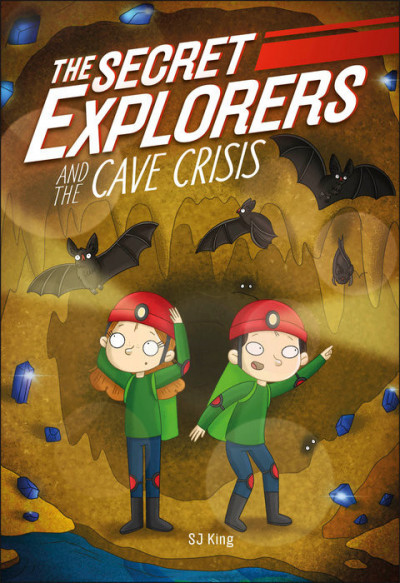
Meet the Secret Explorers - a band of brainiac kids from all around the world, here to take young readers on a series of fact-filled fictional adventures! Each with their own specialty, from outer space to dinosaurs, these young globetrotters will teach kids aged 7-9 that learning can be fun, encouraging them to become experts in something they love.
In this story, Leah the biology explorer and Cheng the geology expert are sent on a daring mission to a network of caves in India. However, when they get there they realize there's more to this mission than meets the eye. The gripping narrative is filled with scientific facts as the explorers navigate the subterranean world and come across the animals that live there.
This epic adventure is packed with:
- Fun facts and beautiful subterranean illustrations for kids aged 7-9. - Informative diagrams to make science and nature seem simple. - A summary of all the scientific discoveries made throughout the story. - Quizzes, mission notes, and a glossary of definitions making it the perfect classroom read.
Paul Saxon, a geology professor, is warned of a pending apocalypse -- political divisiveness is creating social collapse. Who will die and how will they die? Paul sees it as the Quick Death in the immediate panic, then the Big Death as supplies run out, then the Slow Death as the survivors struggle to see the next day. Paul purchases a cave property in western Alabama, outfitting the cave to be a secret, hidden refuge. Away on business in Atlanta, riots break out and Paul flees to northwestern Georgia. The rest of his family barely makes it to the safety of the Alabama cave as the President declares martial law and the southern states close their borders. Paul stumbles onto a refuge that has taken a different approach. He becomes the Discriminator, deciding who is let in and who is sent away. Hundreds of miles distant, his family is discovered and must flee. Where can safety be found, how can they get there, and will anyone help them? pb, 234 pp.
John Mylroie is Professor Emeritus of Geology at Mississippi State University. After childhood in rural upstate New York, he attended Syracuse University, graduating in 1971 with a Zoology degree Summa Cum Laude and Phi Beta Kappa, and also lettering on the soccer team. He met Joan Saxon, a fellow Zoology major and Phi Beta Kappa, in Chemistry lecture his freshman year; they were married in 1970. Draft number 69 in the first draft lottery sent John to the Navy for a year as a sonar technician. While subsequently working in the electronics laboratory of the Biology Department at SUNY Albany, John decided to turn his sporting interest in caves into a career. He entered the Geology PhD program at Rensselaer Polytechnic Institute in 1974, graduating in 1977 and taking a faculty position at Murray State University where Joan earned a MSc in microbiology and taught as an instructor.John and Joan decided to start a family in 1981, and by November 1983 had three sons, the latter two appearing as undiagnosed identical twins (surprise!). With five mouths to feed, John took the Department Head position in the Geology and Geography Department (now Geosciences) at Mississippi State University in 1985. Joan later became a Geography instructor. He continued his island cave research program, often taking the entire family into the field. The National Speleological Society awarded John their Science Award for his work on island caves in 2000, and the Honorary Member award, the society's highest award, for lifetime contributions to cave science in 2008. Joan and John have completed field work in 25 countries, and they have published hundreds of professional papers, reports, field guides, and articles. Their work on islands across the Atlantic, Pacific, and Indian Oceans, as well as the Caribbean and Mediterranean Seas, has given them insight into how peoples and cultures interact with the environment in remote settings.After a career of writing factual material in scientific literature, John decided it was time to make things up and write fiction. He has written books in the science fiction, fantasy, mystery, and spy thriller genres.
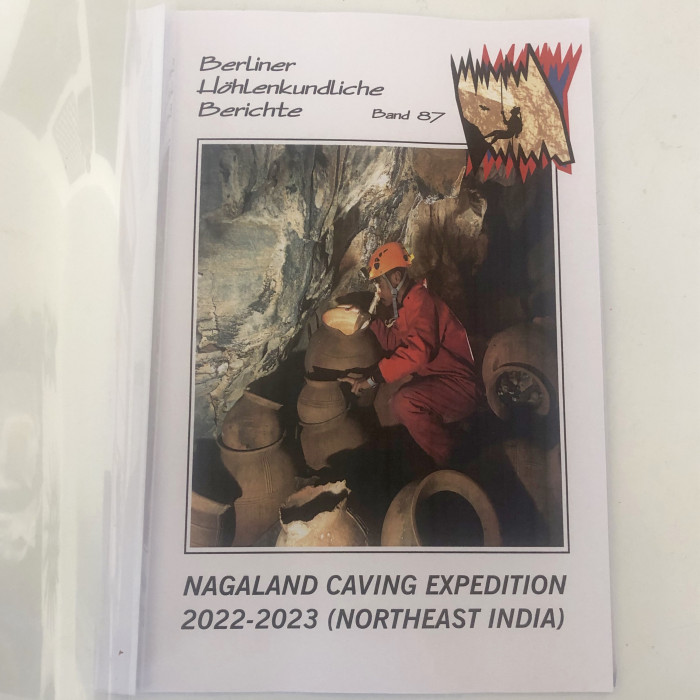
74 pp., many cave descriptions, cave surveys and maps; Berlin 2024. 12 caving days; 13 cavers; 33 caves surveyed; total score 1.8 Km; longest and deepest cave: Kijingvong Long Khun (Samomi), 335 m long and 115 m deep.
36 pp., hundreds of cave descriptions, cave surveys and maps; Berlin 2023.
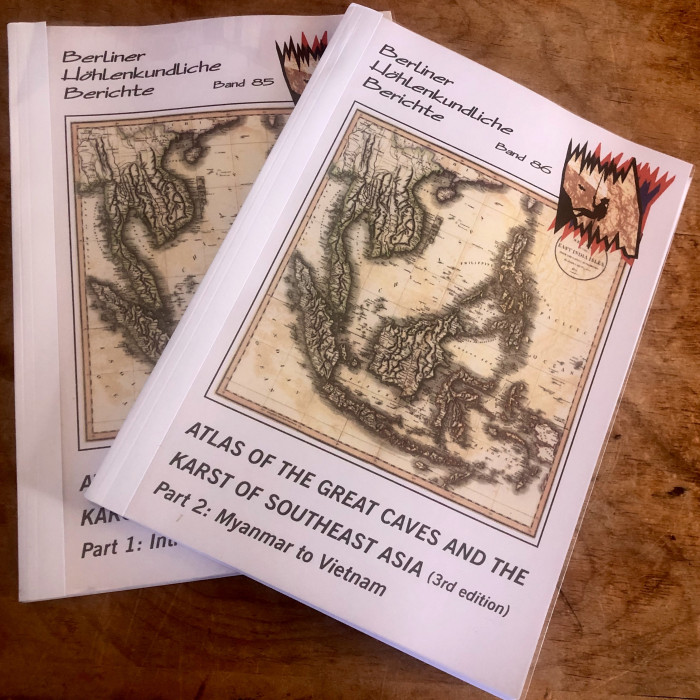
The “Yellow Pages” on caving in SE Asia. Each country is presented in detail including topographic and karst occurrence maps as well as a description of the geological settings, the history of speleological exploration, a detailed list of the longest and deepest caves (incl. surveys), a list of useful addresses and an in–depth bibliography. Hundreds of cave surveys and cave descriptions. Some countries also have other relevant thematic maps. Vol. 85: Introduction & Brunei to Malaysia (168 p.). Vol. 86: Myanmar to Vietnam (167 p.). In English. German and French abstracts.
The only and most comprehensive cave registry of the mainland part of Malaysia. Lists more than 900 caves, with records starting in the 19th century. Includes geographical, geological as well as biospeleological chapters. In-depth bibliography and indexes. This is a much enhanced 2nd edition of the previous book produced in 2001 by Gua Publications (Liz Price).
The stand of play (as at March 2007) on the lava caves tube of Rwanda. Replaces volume 11 and 15 of this series. Includes the new longest cave of Rwanda (Ubuvumo Bwibihonga, at 4,530 m of length). Describes more than 72 caves with a passage length of over 25 km. Bi-lingual English/French with a German abstract.
BY Herbert Daniel Gebauer. 102 pp., colour photo tables and maps, many surveys; Berlin 2017.
Sixty-one caves are presented in this volume in detail, including Pielkhlieng Pouk which was so far surveyed to a length of 9,660 m and explored to over 12.6 km. Many of these caves are not fully explored yet. Twenty-seven caves not yet visited are mentioned, emphasizing the cave potential in the Khaddum area for future explorers. In English language.
By Dreybrodt and Loveridge. 87 pp. Over twenty-seven kilometres of caves passages from 98 new caves are described in this volume, representing the results yielded by the five most recent expeditions to the Southern Shan State (to Pinlaung, Hopong and Ywangan areas) as well as two expeditions to the Kayah State. Includes the new deepest cave of Myanmar (Ju’s Gu, over 300 m deep) as well as many new entries to the list of longest caves of the country.
83 pp., colour photo tables, many maps & surveys; Berlin 2017. Michael Laumanns & Nancy Pistole (Eds.): International Speleological Project to Cambodia 2017 (Provinces of Siem Reap, Banteay Meanchey, Odda Meanchey and Battambang). The first systematic speleological investigations in the Cambodian province of Siem Reap (Phnom Kulen National Park). New longest cave of Cambodia, La Ang Khchal (1,960 m) near the Thai border in Battambang province. Altogether 8.1 km of cave passages from 54 caves are presented in detail. In English with a German and a French abstract.
362 pages, zillions of cave descriptions, cave surveys and maps; Berlin 2017. The "Yellow Pages" of caving in Africa. New longest cave of Africa. Each country is presented in detail including maps (e.g. topography, geology and karst occurrences) as well as a description of the geological settings, the history of speleological exploration, a detailed list of the longest and deepest caves (incl. surveys), a list of useful addresses and an in-depth bibliography. Vol. 68 covers: Introduction and Algeria to Madagascar (184 p.). Vol. 69 covers: Malawi to Zimbabwe and General Ref's (178 p.). In English. With German & French abstracts in vol. 68.
70 pp., colour photo tables and maps, many surveys; Berlin 2018. The Krong No Volcanic Geopark hosts the longest lava cave of SE Asia (C7 Cave at 1,067 m) and also most of the other long pyroducts of SE Asia. This volume compiles all the caves known from the Geopark to date and describes 49 caves with a total of passages of 10.1 km. There are also biospeleological remarks, an up-to-date summary on the speleogenesis of lava caves and a chapter on the archaeology of the Krong No caves. In English, with a Vietnamese, French, and German abstract.
96 pp., colour photo tables, many maps & surveys; Berlin 2017.
This volume replaces volumes 36 and 62 of this series. About 50 caves with a total of nearly 8 km of passages are presented in detail. Includes the Mbenaltembe Cave System, at 2,380 m the currently longest cave of Gabon. Also, a presumably old rock art cave site is described. In English and French, with a German abstract.
101 pp., colour photo tables, many maps & surveys; Berlin 2017.
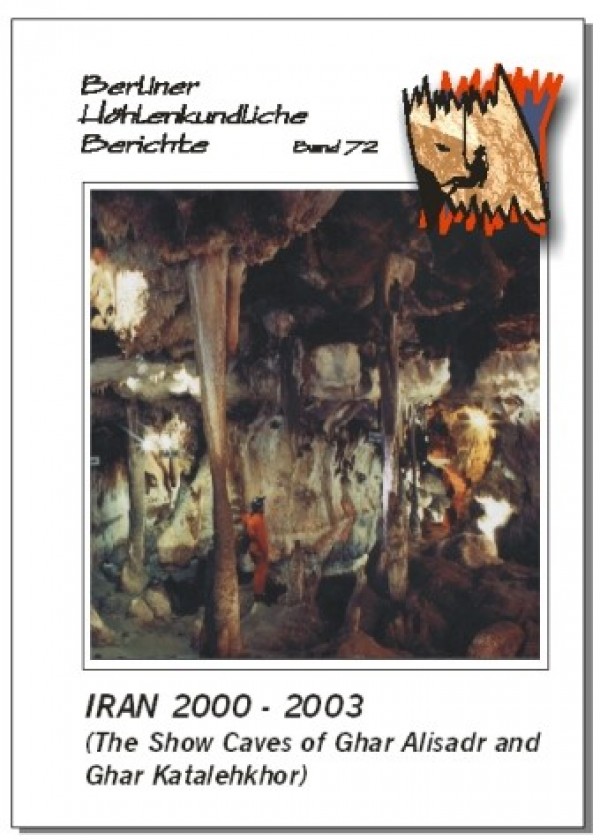
This volume replaces volumes 6 and 12 of this series and describes the longest caves known in Iran so far. Ghar Katalehkhor is featured with a detailed survey showing 12,860 m. The same applies to Ghar Alisadr (11,440 m) which is one of the most visited show caves in the world. A number of caves in the surroundings of Ghar Alisadr are also described. In English.
Michael Laumanns: 125 pp., colour photo tables, many maps & surveys; Berlin 2017.
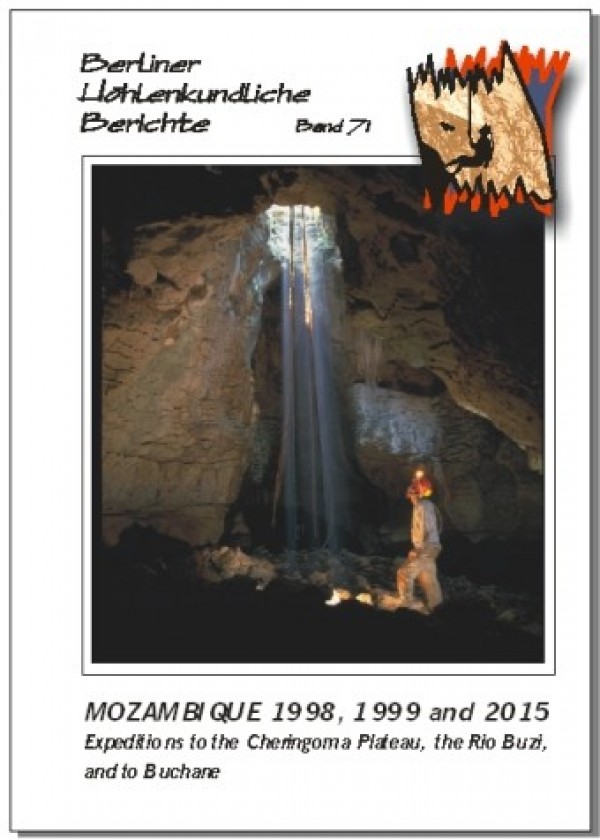
This volume replaces volumes 2, 3 and 62 of this series. About 100 caves with a total of 10 km of passages are presented in detail. This is the only comprehensive source of speleological data on Mozambique. Longest cave is Codzo River Cave at 942 m. In English with a German, Portuguese and French abstract.
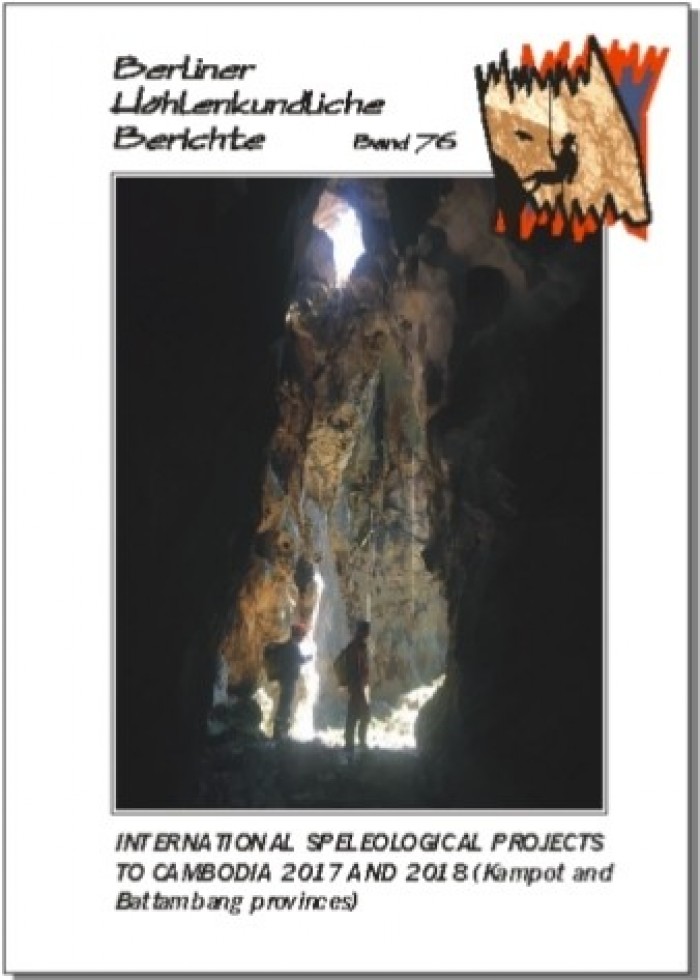
78 pp., colour photo tables, many maps & surveys; Berlin 2018. This volume presents a 2017 US expedition to Kampot Province in southern Cambodia as well as an international expedition in 2018, which continued the 2017 investigations in Phnum Proek District (Battambang Province). Sixty-two new caves and 9.9 km of passages were mapped, including the new third longest cave of Cambodia (Roung Heyndan 5 at 1,577 m). Roung Dei Ho-Thom Ken was extended and again became the longest of the country (2,036 m). The biospeleological findings of the 2018 expedition are also presented. In English with a German and a French abstract.
One afternoon, eleven-year-old Titan, his friends from the Wild Boars soccer team, and their coach rode their bikes to explore local caves. They crawled through the narrow tunnels in the dark to reach the center of the cave. When they turned to go home, heavy rains had flooded the tunnel. They were trapped!
With rising waters and monsoon season upon them, time and oxygen were running out. The world watched with bated breath as rescuers from around the globe joined forces to try to free the boys. After eighteen harrowing days, in an unprecedented effort of international teamwork, they were finally saved.
Award-winning author Susan Hood and journalist Pathana Sornhiran based this picture book on Sornhiran’s first-hand reporting of the event, and Dow Phumiruk’s beautiful illustrations bring the story to life. The book also includes a timeline. Ages 4-8, 48pp, HB.
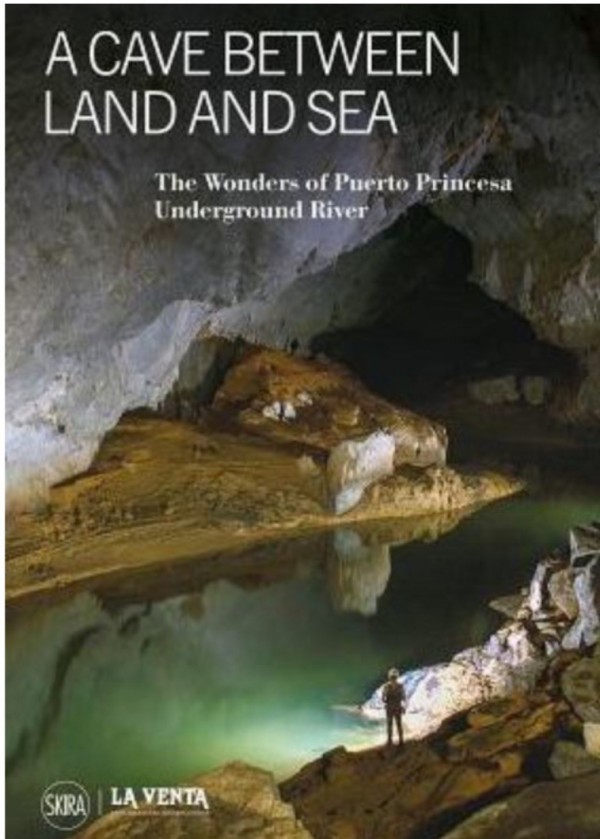
The island of Palawan, in the Philippines, conceals an extraordinary subterranean treasure: the Puerto Princesa Underground River, or Natuturingan, as the locals call it. This immense cave has been a UNESCO World Heritage Site since 1999, and since 2012 it has been listed as one of the "New7Wonders of Nature".
It plays host to an underground river that traverses the mountain from one side to another, and which flows out just a few yards from the South China Sea. It features an exceptionally rich eco-system, encompassing hundreds of animal species, many of which are native, and a food chain based on the guano generated by gigantic colonies of swiftlets and bats. One of the most popular caves in the world for tourists, Natuturingan retains intact its ancient fascination thanks to far-sighted management: no lighting has been installed inside, no passageways have been paved, and no jetties have been built on the beach. Using small outriggers, visitors can sail for around one mile into the breathtaking flooded galleries. But the cave also includes numerous other chambers, some of which are colossal in scale. Here, immersed in the silence of time, there are mineral formations of quite stunning beauty.
Over the past thirty years, the La Venta group has made a crucial contribution to the efforts to explore and document this cave. La Venta's longstanding input is at last charted in this book, which gives everyone an insight into what is one of our planet's most extraordinary underground. by Antonio De Vivo, Paolo Forti (Editor), Leonardo Piccini (Editor)
98 pp, many colour photos, maps & surveys; Berlin 2020. A standard overview on the caves of one of the largest karst areas in Brazil. Includes the 2017 and 2019 international expeditions. 337 caves with a total of 22.4 km of passages are described in detail. In English, with a German and French abstract. Michael Laumanns, Rafael Camargo and Livia Madeira Cordeiro.
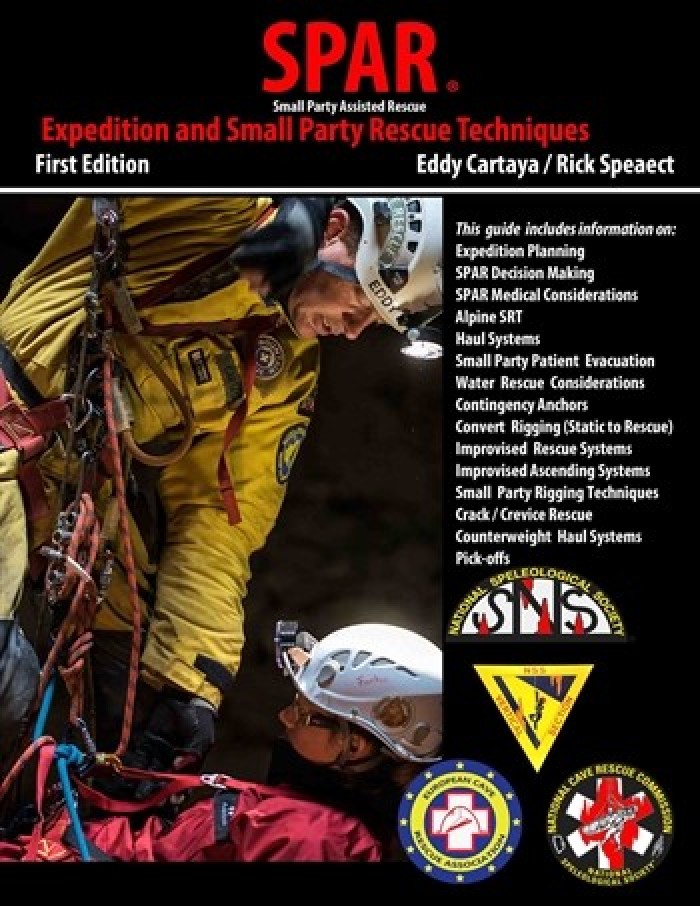
SPAR - Expedition and Small Party Rescue Manual. 600 pages double spiral bound. More than 1000 illustrations and photographs. The skills and techniques presented in this manual have also been referred to as Small Party Self Rescue, or simply, Self Rescue. The book covers a set of assessments, skills, and techniques that a small team of cavers can use to assist an injured member of their own party without the reliance or assistance from outside resources/teams. While written in the context of caving, these skills work in other environments. They are equally useful to mountaineers, rescue personnel, fire-rescue, rope access, arborists, and military/police personnel dealing with specialized situations where minimal gear, urgency, remoteness, and sub-optimal anchor situations exist. Topics addressed in the manual include: Expedition Planning, SPAR Decision Making, SPAR Medical Considerations, Climbing Systems, Alpine SRT Haul Systems, Small Party Patient Evacuation, Water Rescue Considerations, Contingency,Anchors And More...
By Michael Laumanns & Liz Price. 335 pages, hundreds of cave descriptions, cave surveys and maps; Berlin 2016.
The "Yellow Pages" of caving in SE Asia. Each country is presented in detail including topographic and karst occurrence maps as well as a description of the geological settings, the history of speleological exploration, a detailed list of the longest and deepest caves (incl. surveys), a list of useful addresses and an in-depth bibliography. Hundreds of cave surveys and cave descriptions. Some countries also have maps showing the administrative divisions and other relevant thematic maps. Vol. 65 covers: Introduction & Brunei-Malaysia (168 p.). Vol. 66 covers: Myanmar-Vietnam (167 p.). In English. With German and French abstracts.
97 pp., colour photo tables, many maps & surveys; Berlin 2016. The first systematic speleological investigations in the Cambodian provinces of Stoeng Treng, Banteay Meanchey and Kampong Speu. Also describes 2 caves from a briefly visited new caving area in NE Battambang near the Thai border. Seventy-four new caves and one presumably old rock-art site (altogether 4.6 km of cave passages) are presented in detail. Includes an up-to-date article on cave bat conservation in Cambodia. In English with a German and a French abstract.