Featured Books & Gifts
Cave & Caving Books
Cave Bibliographies
Cave Diving
Cave Life
Caving Techniques
Educational (General & K-12)
Geology, Speleology & Archeology
Guidebooks (NSS Conventions)
History
Management & Conservation
NSS Speleo Digests
Photography
Popular Titles and Fiction
Out Of Print Titles
Rescue
Show Caves
Speleology Related Publishers
Wild Caves
Young Readers
Updated Sale Page
Gift Certificates
Sale Priced Goods
Bat Books
Jewelry
Rare Books & Collectibles
Clothing & Accessories
Toys & Plush
Home, Art & Gifts
  1. Home >
  2. Featured Books & Gifts >
  3. Cave & Caving Books >

Management & Conservation

Sort By:
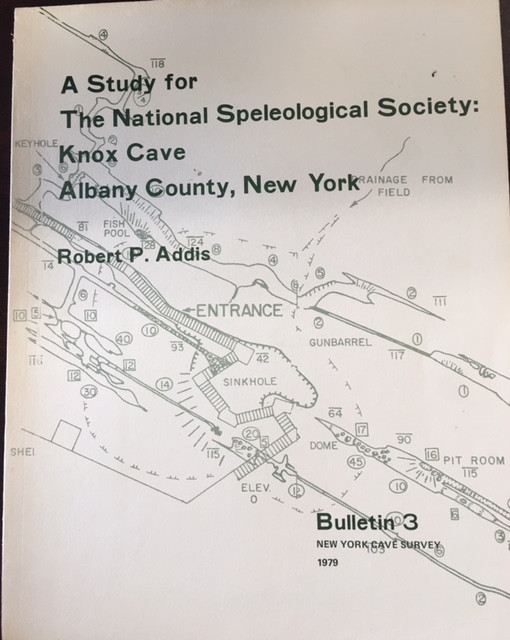
A Study For The NSS: Knox Cave - Product Image

A Study For The NSS: Knox Cave

A detailed study in cave management with applications to caves worldwide. Bulletin #3 of the New York Cave Survey. By Robert P.Addis, 139pp, illus., 1979, pb.
 
 Price: $8.00
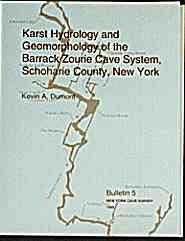
Barrack Zourie Cave System; Schoharie County - Product Image

Barrack Zourie Cave System; Schoharie County

Bulletin #5 New York State Cave Survey. By Kevin Dumont, fold out map, color illus, 71pp, pb, 1995.
 
 Price: $12.00
The Bat House Builder's Handbook - Product Image

The Bat House Builder's Handbook

America's bats are an essential part of a healthy environment. Nevertheless, many bat species are in alarming decline, largely because of unwarranted human fear and persecution and the loss of natural roosts. You can help by putting up a bat house. You'll benefit directly from having fewer yard pests and will enjoy learning about bats and sharing your knowledge with friends and neighbors. Few efforts on behalf of wildlife are more fun or rewarding than helping bats. 32 pp, Paperback. By Merlin D. Tuttle, Mark Kiser, and Selena Kiser.

Updated 2013 edition. The Bat House Builder's Handbook has been the definitive source for bat house information. As primary predators of night-flying insects, bats play a vital role in maintaining the balance of nature. By consuming vast numbers of pests, they rank among humanity's most valuable allies. Just one little brown myotis can catch a thousand or more mosquito-sized insects in an hour, and a colony of 150 big brown bats can catch enough cucumber beetles each summer to prevent egg laying that otherwise could infest local gardens with 33 million rootworms. Cucumber and June beetles, stinkbugs, leafhoppers, and cutworm and corn earworm moths--all well-known pests--are just a few of the many insects consumed by these frequent users of bat houses. In addition, many pests flee areas where they hear bat echolocation sounds. Our immediate goal is to preserve America's most widespread species in sufficient numbers to maintain nature's balance and reduce demands for chemical pesticides. Thanks to a decade of BCI-sponsored bat house research we are now able to accommodate 14 species of North American bats in the bat houses described in this handbook, including threatened and endangered species such as the Indiana myotis and Wagner's bonneted bat. Bat houses are being used from Mexico and the Caribbean to British Columbia and Newfoundland.

Best of all, if you carefully follow instructions, your odds of success exceed 80 percent. Isn't it about time to extend a helping hand in exchange for a healthier neighborhood?. Merlin Tuttle and his colleagues at Bat Conservation International at work. Bats fly the night skies in nearly every part of the world, but they are the least studied of all mammals. As the major predator of night-flying insects, bats eat many pests. Unfortunately bats are facing many problems, including a terrifying new disease. White-nose Syndrome is infecting and killing millions of hibernating bats in North America. But Dr. Tuttle, with the help of his fellow bat scientists are in the trenches--and caves--on the front line of the fight to save their beloved bats. For ages 10+. By Mary Kay Carson with photographs by Tom Uhlman. PB, 80pp.

 
 Sale Price: $5.00
  Regular Price:$9.00
Caves Processes, Development, Management - Product Image

Caves Processes, Development, Management

Edited by David Gillieson. 1996 paperback. 324 pp. This book is aimed at students of the natural environment, but it will also appeal to those - cavers, environmental managers and field naturalists - who are curious about the underground world and its inhabitants. it is illustrated throughout with photographs, maps and line diagrams, almost all of which are original to the book.
 
 Price: $40.00
Biodiversity and Cultural Property in the Management of Limestone Resources - Product Image

Biodiversity and Cultural Property in the Management of Limestone Resources

Lessons from East Asia.  By Japp Vermeulen and Tony Whitten.  A Directions in Development title.  1999.  120 pp. Sb. Discussion of karst, karst organisms, as well as archaeological, geological, Aesthetic and cultural values.  Plus chapters on Vulmerability, impact mitigation and options fo national management of limestone resources.  
 
 Price: $20.00
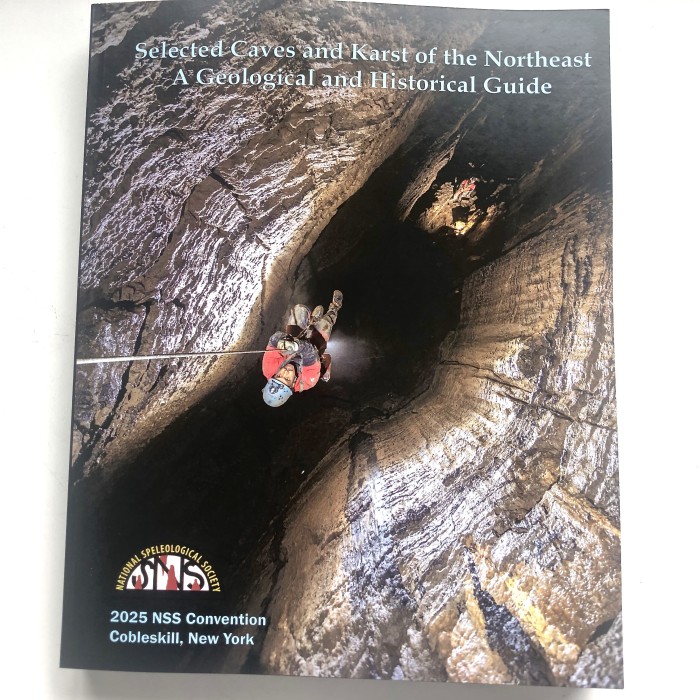
Selected Caves and Karst of the Northeast A Geologic and Historical Guide - Product Image

Selected Caves and Karst of the Northeast A Geologic and Historical Guide

Primary authors John Dunham and Thom Engel. Editing and layout John Dunham.  This spectacular 335 page once in a generation treatment of the caves in the Northeast is a monumental accomplishment.  The well organized, extensive speleological, historical, and geological guide will serve as the comprehensive, authoratative guide to caves and karst in the northeast for years and years to come.  As a bonus (as if any were needed!) the book includes detailed field trip guides for both of the NSS convention Sunday geo trips.  A must have publication.  This was a short print run with the majority being sold at convention to attendees.  In our opinion this book will stand as one of the finest convention guidebooks every published.

 
 Price: $65.00