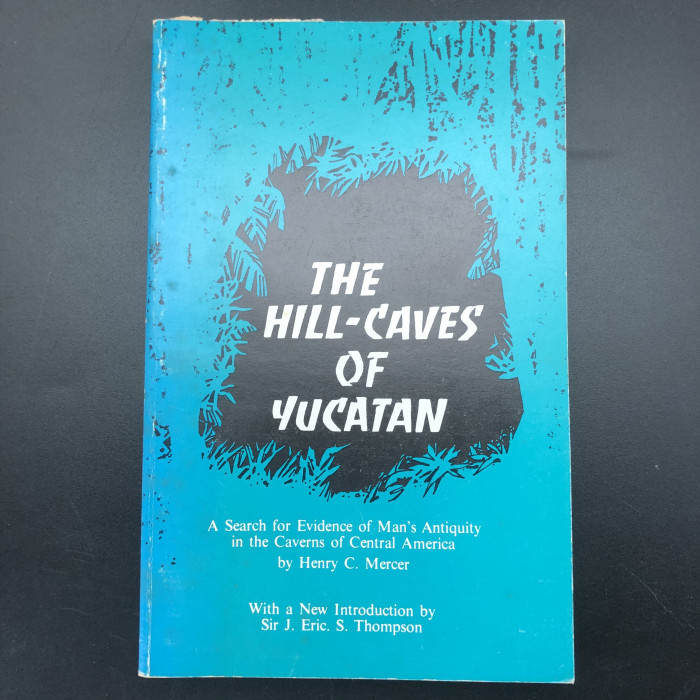
A search for evidence of man's antiquity in the caverns of Central America. Being an account of the Corwith expedition of the Department of archaeology and palaeontology of the University of Pennsylvania / by Henry C. Mercer. 1975 SB reprint of the original 1896 edition.
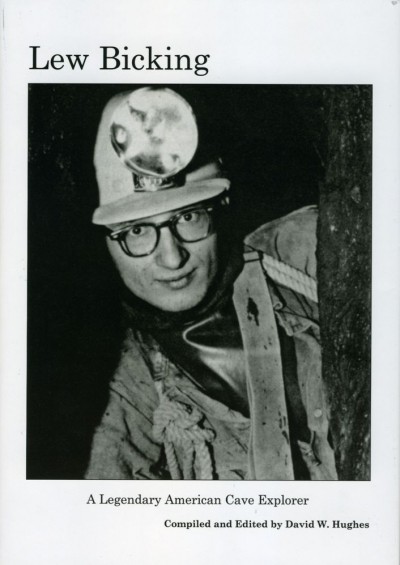
By David W. Hughes, 324 pages, Hardbound. Baltimore-Based caver Dr. Lewis A. Bicking, Jr., was exceptionally bright-some would have said "brilliant." He was valedictorian of his high school class and earned a Ph.D. at a relatively young age. Bicking was a scientist and, in his spare time, he was also a cave explorer. Lew worked and studied in the Biophysics Department at Johns Hopkins University during nearly the entirety of his caving career. Lew was the first caver to consistently, energetically, enthusiastically, and repeatedly unravel some of the mysteries of what is now the world-class Friar's Hole Cave System, West Virginia. Diminutive in physical stature, Bicking seems to have possessed that critical intangible attribute-desire-in generous abundance. Lew's explorations in Friars Hole are legion, and the man himself is an American caving legend.
The karst regions of Slovenia, like those in many other parts of the world, result from the rock being limestone which is slightly soluble in rainwater. This not only causes a lack of surface streams and the presence of caves and underground rivers, but also other features characteristic of karstic landscape. In particular, solution of intersecting fissures in the rock results in cone-shaped depressions – dolines – in which some residual soil collects, and more is sometimes added by farmers to allow cultivation. Bigger, often vertical-sided depressions called collapse dolines result when the ground surface collapses into caves or cavities formed by underground streams. Collapse dolines include the immense pits at Škocjanske jame.
What is unusual about Slovenia is the amount of karst terrain that it contains. 43% of the whole country is karst; and of the part of Slovenia which was the old Austrian region of Carniola or Krain (Gorenjska, Dolenjska and Notranjska, including the Postojna area), 69% is karst.
The caves and spectacular features of karst have for centuries appealed to visitors and travellers, as they do to tourists today. For much the same reasons they have appealed to artists whose desire was to capture the scenes for themselves and for posterity.
Over the last two centuries or so we have become more and more accustomed to images of the real world. In modern times natural history films have become almost a substitute for the real thing. Personal cameras record what we have seen, sometimes more reliably than our memories, and magazines as well as television provide accurate pictorial information.
But it was not always so. Some five and a half centuries ago, printed books began to appear, providing information for those who could read. At first very few were illustrated, but about 430 years ago Valvasor was already producing his book on the castles of the province of Krain, illustrated with copper engravings; and ten years later, in 1689, there appeared his great topographical book on Krain, containing 535 illustrations. Painters of course did not depend on books to have their paintings displayed. But in later times their work was reproduced in books and reached a much wider audience.
At the same time, as technical developments made such reproduction easier and cheaper, the population increasingly learned to read. Poverty overall reduced and more people were able to enjoy leisure. This, with education, allowed them to use books and to see pictures other than those in the stained glass windows of churches.
This broadening of the kinds of readers, as well as an increase in their numbers, led quite early in the 19th century – only two centuries ago now – to the appearance of popular illustrated books aiming to arouse and satisfy curiosity. Titles such as The Wonders of Nature and Art (1803) and The Hundred Wonders of the World (1818) make this clear. Such books often include cave descriptions, many of them illustrated, and it was in this way that people living in non-karst regions became aware of the existence of caves.
So much for generalizations and context. What did all the images aim to do? One or more of the following, surely: to express the impressions, emotions and feelings of the artist; to inform people about caves and karst features; to give pleasure, by beautiful paintings or by luxurious albums of engravings; to illustrate texts (travel books, regional descriptions and guidebooks, scientific studies, accounts of cave exploration, historical studies, studies of cave images); to publicise particular caves and to advertise an unrelated product by an attractive picture.
Whilst scientific or geographical studies may require images of little-known caves or phenomena, it is clear from the content of this book that certain caves were more often the subject for artists and photographers than others. Several factors are responsible for this. Clearly an attractive cave, as the very word denotes, attracts more attention. A picturesque scene attracts pictures. And such pictures attract purchasers.
Also relevant is the extent to which the cave or place is already known. The better known places will be visited by more artists and photographers, and by more potential purchasers. Purchases, of course, include not only individual images but also illustrated guidebooks.
Another factor besides picturesque beauty affected this popularity of a place, especially before the motor car became widely available. That was its location and ease of access for large numbers of people. For Slovenia, many potential visitors were to be found at Trieste (as a major part where they waited for their ships) and on the main routes such as the vital road from central Europe through Postojna to the coast. Hence the popularity of Vilenica, Škocjanske jame and Postojnska jama. They attracted the artists and photographers, and they also attracted the visitors who would buy their productions.
Among the many cave images known, some (only a few, but nevertheless some) do provide information that is historically important. Dress is necessarily shown wherever there are people. That of the visitors is normal for the period and sometimes it is the dress that helps to date the image. Images of cave entrances necessarily record whatever barriers, gates, seats or buildings that were present at the time.
The earliest images of karst features occurred on 16th century maps, where the land was represented, not by accurately surveyed rivers, roads and contour lines, but by pictorial representations. Some of these were symbolic, such as trees for forests and little hills for mountainous county. But special features (and Cerkniško jezero was certainly considered very special) were drawn individually and the space required for this gave them extra prominence.
Individual pictures were sold for display, as indeed they still are. Such engravings were sometimes published together in albums, with or without text, as fore-runners of modern coffee-table books. The emphasis there was on attractive images, whereas later in the century pictures were used to illustrate points made in the text, for example in the books of Martel and Kraus or to illustrate places described in guidebooks.
Engravings, where the artist’s image was redrawn by the engraver on a metal plate (or lithographs where it was redrawn in stone) were still used to illustrate books and magazines up the 1890s. In that period the “artist’s image" to be engraved was often a photograph. Only when the half-tone process was developed in the 1880s, was it possible for photos to be transferred mechanically to paper in large quantities without an intermediate process.
In those earlier days (1870s to 1890s) photographs were usually engraved for publication. But the reverse also occurred. Photographers realized that cave pictures were saleable, but they found also that they were very difficult to take.
Copying was not only done to facilitate reproduction of images. It also occurred, without acknowledgement, when the easiest source for a new (saleable) illustration was an earlier one. In book publication (and ship capture) this is termed piracy. It was common in the 19th century and several examples are exposed in this book.
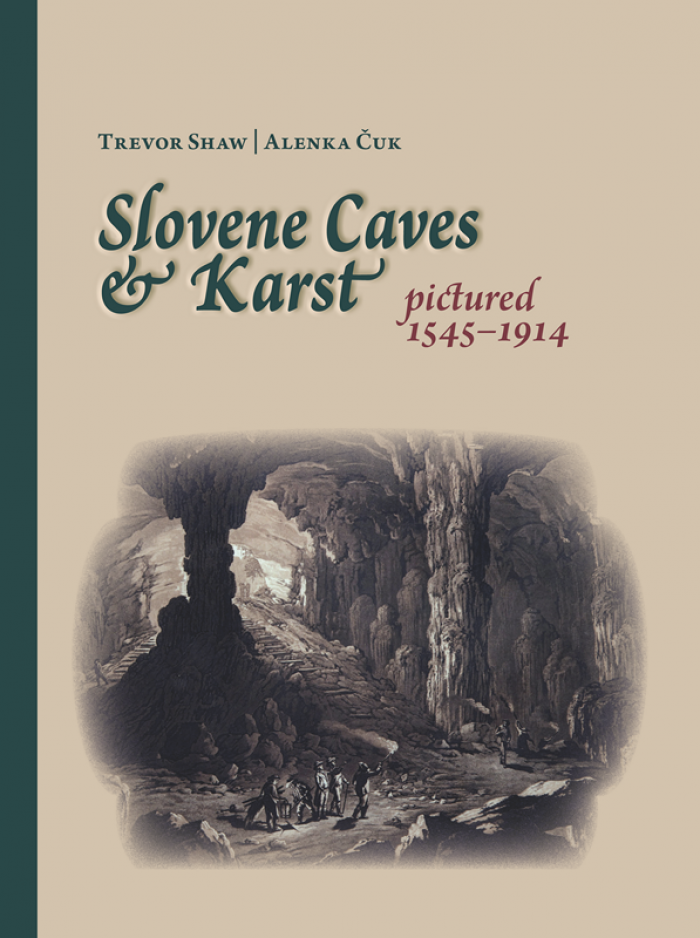
Of course, cave images of quality continued to be made after the cut-off date for this book – the start of World War I and the end of Slovenia’s time as part of Austria. Photographers include Friedrich Oedl (1894-1969) at Škocjanske jame in 1921, Franci Bar (1901-1988) in many caves, and several members of the Društvo za raziskavanje podzemskih jam. All those photographers were cave explorers themselves. Painters of this later period include Leo Vilhar (1899-1971); Mario Vilhar, his son (born 1925), and Lojze Perko (1909-1980). By Trevor Shaw and Alenka Cuk, 2012.
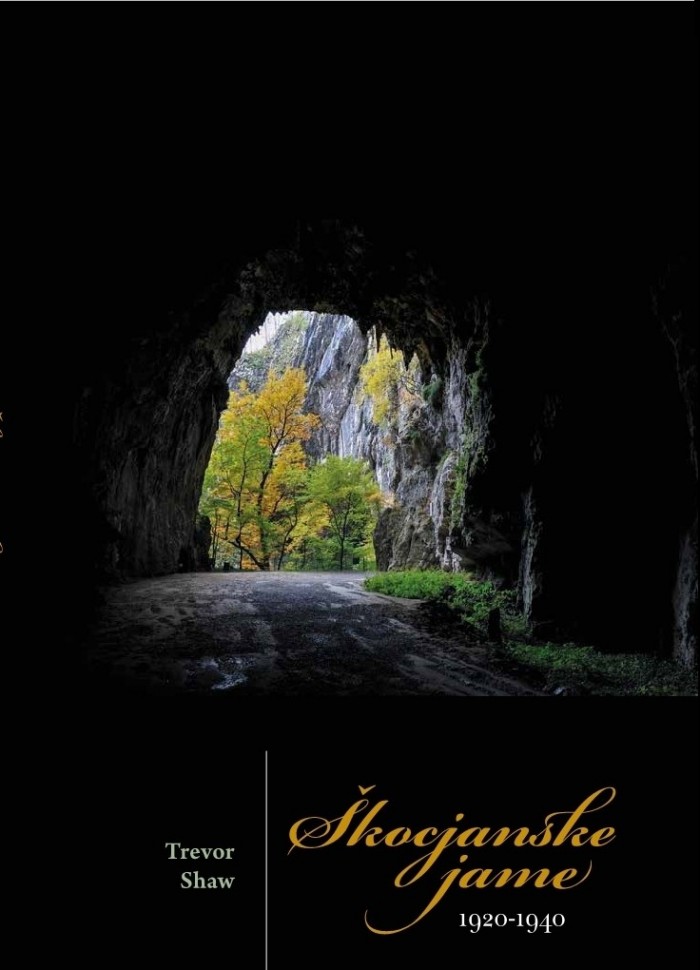
By Trevor Shaw, 2018. The cave Škocjanske jame has a long history of which the relatively short period between the two World Wars is the subject of this book. The area had just been transferred from Austria to Italy. Most of the cave had been explored before 1914 so the objective in the 1920s and 1930s was mainly to develop it as a tourist cave. Visitors had been accepted earlier but the emphasis now shifted to developing the tourist route through the cave, with new bridges and pathways as well as a new tunnel to the surface. The need for all arrangements to be formalized under Italian law caused problems and the re-opening of the cave to the public was delayed until 1923. Besides this development work, some exploration took place, new surveys were made and there were scientific studies. A little-know fatal accident is reported. Throughout the whole period the personalities of the individual guides, explorers and managers lead to a very human story as well as an exciting one. What helps to make this book so significant is the immense input from Italian archives, archivists and historians.
Preface
Acknowledgements
1 Introduction 2 Problems of Changing Nationality 3 Development as a Tourist Cave in the 1920s 4 Further developments, in the 1930s 5 Exploration by Austrians in 1921 & 1922 6 Federico Prez in 1922 7 Bertarelli’s Exploration in 1923 8 Surveying in Škocjanske jame 9 Images of the Cave – Models, Paintings & Photographs 10 Postal System and Postcards
Appendix: Equivalent Place-Names in Italian, German & Slovene
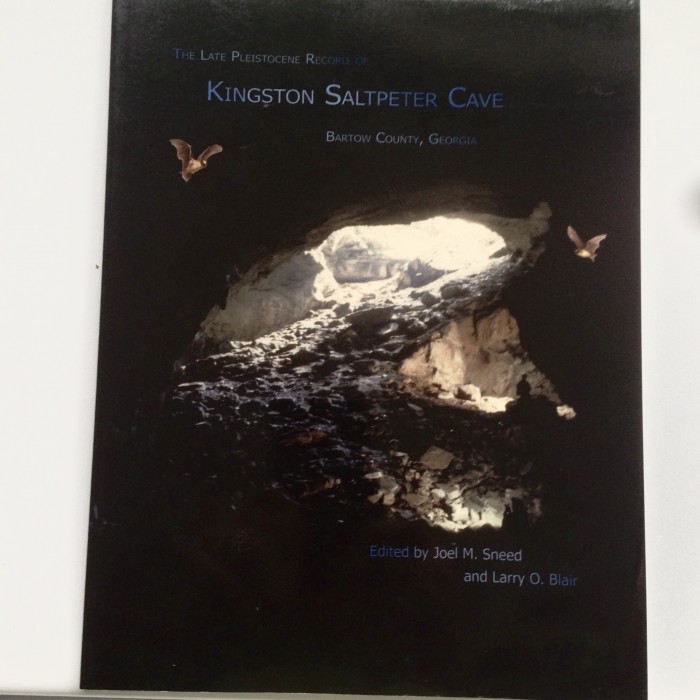
In Bartow County, Georgia. Edited by Joel M Sneed and Larry O Blair. Sb 70pp. From a well known and highly visited cave, an assemblage of Ice Age bones and teeth have been unearthed by members of the National Speleological Society. The study of these remains has brought to light important new information about the late Pleistocene in Georgia. This volume, the culmination of many years of study, includes the discovery, excavation and detailed descriptions of the fossils.
good knowledge of the natural and cultural heritage of karst is a precondition for the rational planning of life on it. We try to organize the knowledge to make it as useful as possible for planners. We are involved in individual projects related to the regional planning, water supply systems, the construction of transportation infrastructure, the closure of landfills in karst areas, the collection of data on karst caves and their protection, karst ecology and determining the extent of human influence on the karst underground. A new book series Karstology and development challenges on karst was designed to present the results of completed and new projects to a broader public. The first book with the subtitle Water contains selected directly applicable research studies on karst waters, their characteristics, endangerment, and protection. It is composed of ten chapters, which can be grouped into three main themes. In the introduction the importance, characteristics and vulnerability of karst aquifers are presented,then various case studies of pollution and endangerment are described (traffic, landfills, military objects, flooding), and at the end some guidelines for the protection of karst water sources are summarized. The book is a bilingual publication in Slovene and English. It is aimed at a broad circle of users, researchers, students and planners.
This bilingual scientific monograph with many illustrations presents the Velika Pasica cave, located on the outskirts of the Gornji Ig village on the Krim massif, around 20 km south of Ljubljana, Slovenia. The book presents ecological, taxonomical and biodiversity studies, as well as morphological and historical facts referring to the cave. The cave is small for Slovenian standards, as it is only 105 metres long. On the basis of the specimens collected in the cave, 13 new species from terrestrial and aquatic habitats have been described so far. A considerable number, even on the global scale. The cave was first renowned for the rare cave-dwelling beetles, snails as well as other species. In 2000, a rich community of aquatic animals was discovered, which were not expected to be present there. Since 2006, there have been regular measurements of ecological parameters as well as sampling of fauna from four permanent drips. Fauna was washed-out from a thin layer of dolomite, from which the cave roof consists. The measurements include water and air temperature as well as discharge, measured in one hour intervals. Furthermore, 88 analyses of drip water and an equal number of fauna sampling were conducted. The measurements in the cave were being conducted simultaneously with the measurements of the meteorological parameters on the surface, in the immediate vicinity of the cave entrance.The first book with the subtitle Water contains selected directly applicable research studies on karst waters, their characteristics, endangerment, and protection. It is composed of ten chapters, which can be grouped into three main themes. In the introduction the importance, characteristics and vulnerability of karst aquifers are presented,then various case studies of pollution and endangerment are described (traffic, landfills, military objects, flooding), and at the end some guidelines for the protection of karst water sources are summarized. The book is a bilingual publication in Slovene and English. It is aimed at a broad circle of users, researchers, students and planners.
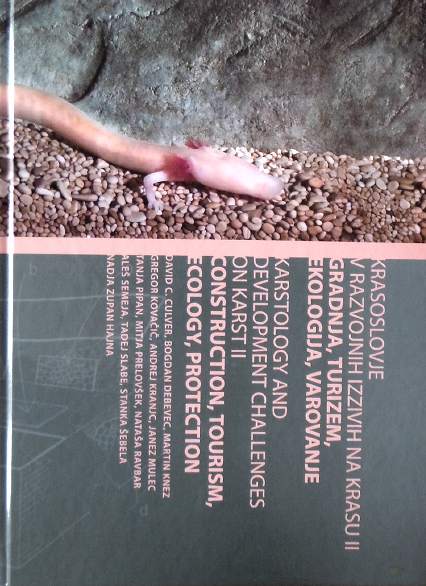
Karstology in Development Challenges in the Karst brings together the findings obtained in planning and construction of motorways in the Karst. More than 350 new caves were opened up in the final wave of construction. This was followed by studies on arranging karstic features for tourism and their management. We also selected studies on karstic ecology, in which we made use of biological and microbiological research. At the end there is a summary of everything we need to take into account in planning different encroachments in karstic areas. In English and Slovenian. By David C. Culver, Bogdan Debevec, Martin Knez, Gregor Kovacic, Andrej Kranjc, Janez Mulec, Tanja Pipan, Mitja Prelovsek, Natasa Ravbar, Ales Semeja, Tadej Slabe, Stanka Sebela, Nadja Zupan Hajna, Gregor Kovacic. 2011. 199 pages.
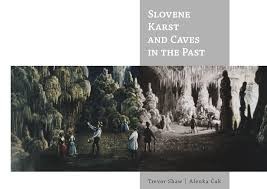
The caves and dramatic limestone scenery of the Slovene karst have attracted visitors for centuries. The great stalagmites and roaring underground rivers were seen by relatively few people at that time but many of them did record their experiences in diaries as well as in print. These are used in the book, which is a result of a long-time collaboration between an English historian of speleology and a Slovene historian, to describe what they saw and what they thought about it, with contemporary illustrations by contemporary artists and photographers. Modern tourism derives from the tours led by Thomas Cook who first came to Postojnska jama in 1868. Music in that cave has a very long history for dancing or concerts. This is only one example of the relation between caves and people as a constant theme in this book. Altogether the 39 chapters describe, for example, the problems facing all travellers in pre-railway days and point out that one of the very first women to explore difficult caves did so at Skocjan. Also touched upon is Darwin's interest in Slovene cave animals and a lot more.
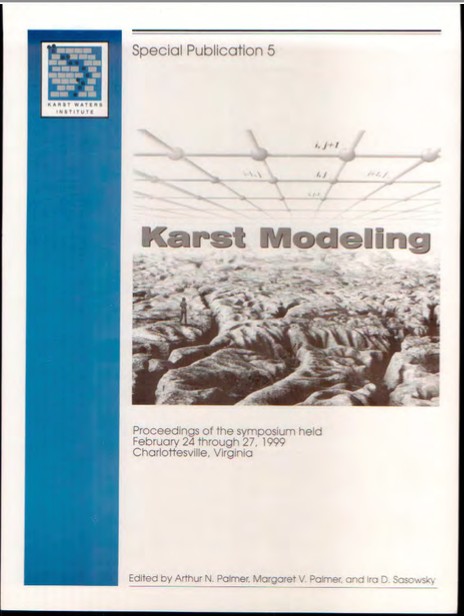
Edited by Arthur N. Palmer, Margaret V. Palmer, and Ira D. Sasowsky
Proceedings of the symposium held February 24 through 27, 1999 Charlottesville, Virginia.
Conference Proceedings (1999). CD, 256 pages. ISBN 978-0-9640258-4-4
Recommended Citation: Arthur N. Palmer, Margaret V. Palmer, and Ira D. Sasowsky, Eds., 1999, Karst Modeling, Proceedings of the symposium held February 24 through 27, 1999 Charlottesville, Virginia. Karst Waters Institute Special Publication 5, Karst Waters Institute, Charles Town, West Virginia, 256 p.
Additional Shipping may be required for KWI books because of weight and clearance pricing depending on your total order. We will contact you before shipping if the charge needs to be adjusted to reflect cost of shipping.
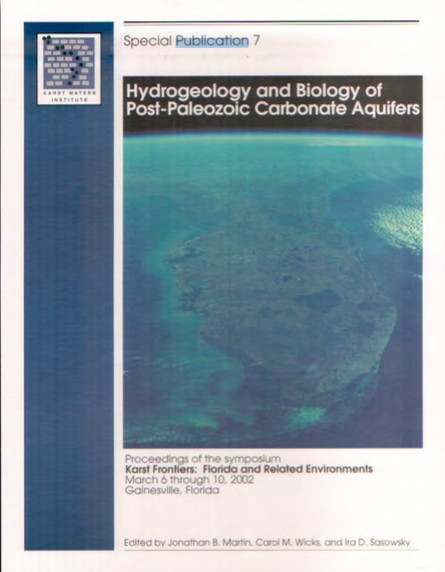
Edited by Jonathan B. Martin, Carol M. Wicks, and Ira D. Sasowsky
Conference Proceedings (2002). Softbound, 212 + vii pages (8.5 x 11″). Includes many photos, maps, and figures. ISBN 0-9640258-6-8
Recommended Citation: Jonathan B. Martin, Carol M. Wicks, and Ira D. Sasowsky (eds), 2002, Proceedings of the Symposium on Karst Frontiers: Florida and Related Environments. Special Publication 7, Hydrology and Biology of Post-Paleozoic Carbonate Aquifers, Karst Waters Institute, Leesburg, Virginia, 212 p.
Additional Shipping may be required for KWI books because of weight and clearance pricing depending on your total order. We will contact you before shipping if the charge needs to be adjusted to reflect cost of shipping.
Edited by William K. Jones, Horton H. Hobbs III, Carol M. Wicks, Robert R. Currie, Louise D. Hose, Ronal C. Kerbo, James R. Goodbar, and Jerry Trout
Manual (2003). Soft-bound, 81 pages. ISBN 978-0-9640258-7-5
Recommended Citation: William K. Jones, Horton H. Hobbs III, Carol M. Wicks, Robert R. Currie, Louise D. Hose, Ronal C. Kerbo, James R. Goodbar, and Jerry Trout, 2003, Recommendations and Guidelines for Managing Caves on Protected Lands, Special Publication 9, Karst Waters Institute, Leesburg, Virginia, 81 p.
Additional Shipping may be required for KWI books because of weight and clearance pricing depending on your total order. We will contact you before shipping if the charge needs to be adjusted to reflect cost of shipping.
Edited by W. K. Jones, D. C. Culver, and J. S. Herman
Conference Proceedings (2003). Soft-bound, 160 pages. ISBN 978-0-9640258-8-2
Recommended Citation: Jones, W.K., Culver, D.C., and Herman, J.S. (eds.), 2004, Epikarst, Special Publication 9, Karst Waters Institute, Leesburg, Virginia, 160 p.
Additional Shipping may be required for KWI books because of weight and clearance pricing depending on your total order. We will contact you before shipping if the charge needs to be adjusted to reflect cost of shipping.
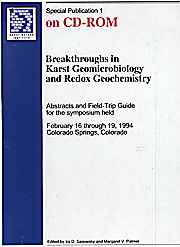
Abstracts and field-trip guide for the symposium held February 16 through 19, 1994, Colorado Springs, Colorado.
Recommended Citation: Ira D. Sasowsky and Margaret V. Palmer, Eds., 1994, Breakthroughs in Karst Geomicrobiology and Redox Geochemistry. Abstracts and Field Guide of the symposium held February 16 – 19, 1994, Colorado Springs, Colorado. Karst Waters Institute Special Publication 1, Karst Waters Institute, Charles Town, West Virginia, 111 p.
Edited by Art and Peg Palmer, this is the guidebook for the 2009 International Congress of Speleology (ICS) and NSS Convention, and is a guide to the significant cave and karst areas of the US, as well as 67 pages of additional information about the regions and countries neighboring the USA. It is a beautiful compilation of articles from various authors from around the US. Its 445 glossy full- color pages feature maps, compiled research, and more. Edited By Arthur N. Palmer and Margaret V. Palmer, 2009, 445 pages, Softbound.
Selected papers and abstracts of the symposium held March 14 through 18, 2007, Postojna, Slovenia.
Conference Proceedings (2007). A4 format. 243 pages. Soft bound. Full color throughout. ISBN 978-0-9789976-1-8
Recommended Citation: Andrej Kranjc, Franci Gabrovsek, David C. Culver, and Ira D. Sasowsky (eds.), 2007, Time in Karst. Special Publication 12, Karst Waters Institute, Leesburg, Virginia, 243 p.
Additional Shipping may be required for KWI books because of weight and clearance pricing depending on your total order. We will contact you before shipping if the charge needs to be adjusted to reflect cost of shipping.
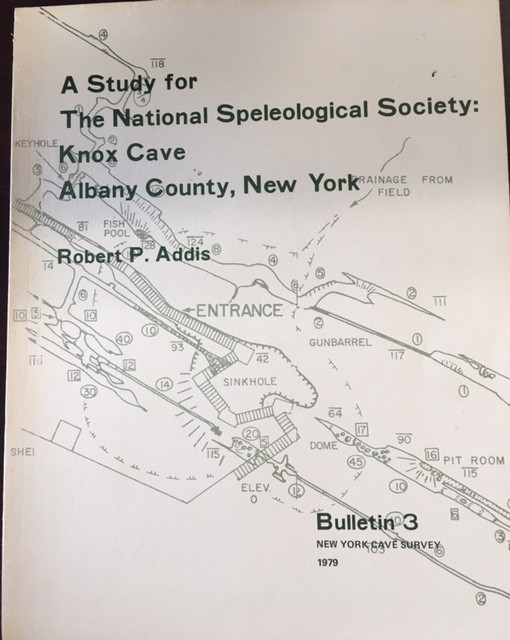
A detailed study in cave management with applications to caves worldwide. Bulletin #3 of the New York Cave Survey. By Robert P.Addis, 139pp, illus., 1979, pb.
Extended Abstracts and Field Guide for the symposium held June 7 through June 11, 2008 in Rapid City, South Dakota
Conference Abstracts and Field Guide (2008). ISBN 978-0-9789976-3-2. 221 pages. Soft bound.
Additional Shipping may be required for KWI books because of weight and clearance pricing depending on your total order. We will contact you before shipping if the charge needs to be adjusted to reflect cost of shipping.
Additional Shipping may be required for KWI books because of weight and clearance pricing depending on your total order. We will contact you before shipping if the charge needs to be adjusted to reflect cost of shipping.
The enclosed CD-ROM contains a scanned version of the complete 1991 book, Palaeokarsts and Palaeokarstic Reservoirs, edited by V.P. Wright, M. Esteban, and P.L. Smart. The digital files are in pdf (tiff) format, which can be viewed on a computer using free Adobe Acrobat software and printed in part or in whole. This important volume brings together critical concepts for the application of karst in the study of petroleum reservoirs. The contributors are leaders in their fields, and provide a synthesis and overview of the factors affecting karst style and distribution worldwide. The 158 pages include 4 chapters: • Karst processes, hydrology, and porosity evolution, written by Peter L. Smart and Fiona F. Whitaker • Palaeokarst types, recognition, controls, and association, written by V. Paul Wright • Palaeokarst: Practical applications, written by Mateau Esteban • Palaeokarst: Case histories, written by Mateau Esteban. Release Date: July 03, 2004. CD only
The enclosed CD-ROM contains a scanned version of the complete book as files in pdf (tiff) format. The book contains 725 pages and 38 chapters, including: • Jerzy Glazek, Pavel Bosák and Derek C. Ford, Paleokarst as a Problem • Yves Quinif, Paleokarst of Belgium • Pál Müller, Hydrothermal Paleokarst of Hungary • Rostislav Alekseevich Tsykin, Paleokarst of the Union of Soviet Socialist Republics • Zhang Shouyue, Paleokarst of China • Derek C. Ford, Paleokarst of Canada • Margaret V. Palmer and Arthur N. Palmer, Paleokarst of the United States • György Bárdossy, Bauxites • Yves Fuchs, Paleokarst-related Uranium Deposits • Adolfo Eraso, Paleokarst in Civil Engineering • Ivan Horácek and László Kordos, Biostratigraphic Investigations in Paleokarst Release Date: July 03, 2002 CD only.
The enclosed CD-ROM contains a scanned version of the complete publication run of the journal Speleochronos (ISSN 1372-6919), as 10 files in pdf (tiff) format. The publication may be viewed on a computer using (free) Adobe Acrobat software, and printed in part or in whole. Articles are primarily in French, and focus on the use of cave deposits for climate studies, hydrology, and neo-tectonism. The 364 pages include 35 titles such as: • La datation uranium-thorium, written by Y. Quinif • Les conglomérats souterrains - Morphologies, genèse et âge U/Th d’après quelques examples alpins et pyrénéens, written by R. Maire et al. • Contribution of isotope chemistry to the study of climatic and environmental evolution of Monte Campo dei Fiori (Lombardy, Italy), written by A. Uggeierri et al. • Morphologic, crystallographic and isotopic study of an ancient flowstone (grotta di cunturines, dolomites): Implications for paleoenvironmental reconstructions, written by S. Frisia et al. • Microsequences de lamines annuelles dans deux stalagmites du massif de Han-Sur-Lesse (Belgique), written by D. Genty et al. • Petrographic evidence of diagenesis in speleothems, written by S. Frisia • Diagenetic replacement of aragonite by aragonite in speleothems: Criteria for its recognition in Botswana and Madagascar, written by L.B. Railsback et al. • Sedimentary recording and dating of seismo-tectonic events by speleothems, written by Y. Quinif and D. Genty Release Date: July 03, 2000 CD only.
Edited by David C. Culver, Louis Deharveng, Janine Gibert, and Ira D. Sasowsky Proceedings of an international workshop held March 18 through 20, 2001. Laboratoire Souterrain du CNRS, Moulis, Ariege, France. 2001, Soft-bound, 111 pages.
Additional Shipping may be required for KWI books because of weight and clearance pricing depending on your total order. We will contact you before shipping if the charge needs to be adjusted to reflect cost of shipping.
Edited by Arthur N. Palmer, Margaret V. Palmer, and Ira D. Sasowsky. Proceedings of the symposium held February 24 through 27, 1999 Charlottesville, Virginia. On CD only.
Special publication #4 of the Karst Waters Institute. An oversized (11" x 14") publication full of photos, two color maps and charts. A must for anyone interested in West Virginia or hydrology. By William K. Jones, 111pp, 1997, Spiral bound.
Additional Shipping may be required for KWI books because of weight and clearance pricing depending on your total order. We will contact you before shipping if the charge needs to be adjusted to reflect cost of shipping.
KWI Special Publication #3. The extended abstracts and field-trip guide for the symposium held Feb.13-16, 1997, Nashville Tenn. Ed.by Sasowsky, Fong & White. 118pp, 1997, pb.
Additional Shipping may be required for KWI books because of weight and clearance pricing depending on your total order. We will contact you before shipping if the charge needs to be adjusted to reflect cost of shipping.
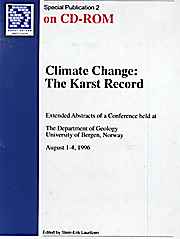
Edited by Stein-Erik Lauritzen. Extended Abstracts of a Conference held at The Department of Geology, University of Bergen, Norway, August 1-4th 1996. 1996. PDF of 196 pg. mss.
A.S. Engel, S.A. Engel, P.J. Moore, H. Duchene, 84 pages, black and white with color cover. This new publication is Special Publication 16 from the Karst Waters Institute, consisting of papers presented by invited speakers and other conference attendees. Topics covered include carbonate mineralogy and geochemistry, modern carbonate environments, diagenesis processes and products, carbonate petrophysics and sequence stratigraphy, fluid circulation and reactive transport modeling, and climate change and landscapes.
Additional Shipping may be required for KWI books because of weight and clearance pricing depending on your total order. We will contact you before shipping if the charge needs to be adjusted to reflect cost of shipping.
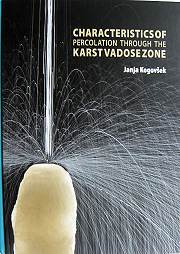
The study of the vadose zone has been based on 35 years research of underground water circulation and the transfer of contaminants in karst and on continuous long-term measurements and analyses of precipitation on the surface and of several representative trickles in the vadose zone of Postojna Cave over consecutive hydrological years and it offers an explanation of the dynamics of the percolation of water and simultaneous transfer of contaminants and their impact on the dissolution of carbonate rock in the vadose zone. Emphasis is placed on a multi-parameter approach based on the simultaneous use of a number of different methods, not only tracing natural tracers but also tests with artificial tracers using different methods of injection. The research contributes to the understanding of the role of the vadose zone in the karst aquifer. In English. By Kogovsek. 168 pp., sb.
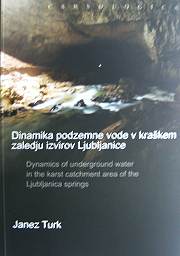
Based on a several years long record of water levels and temperatures in caves between Planinsko polje and the springs of Ljubljanica. Correlation between the data, the discharge of the Unica river and the meteorological data gave new insights into the groundwater dynamics in relation to the recharge events as well as into the hydrological role of Planinsko polje. The work clearly demonstrates caves as important observation points in karst hydrology.