The Carsologica series brings results of a wide array of karst studies, from karst geology, formation and development of karst surface and caves to properties of karst hydrology. Geographically focuses on the Slovenian karst as well as on other types of karst throughout the world. The series is published in association with The Karst Research Institute at ZRC SAZU.
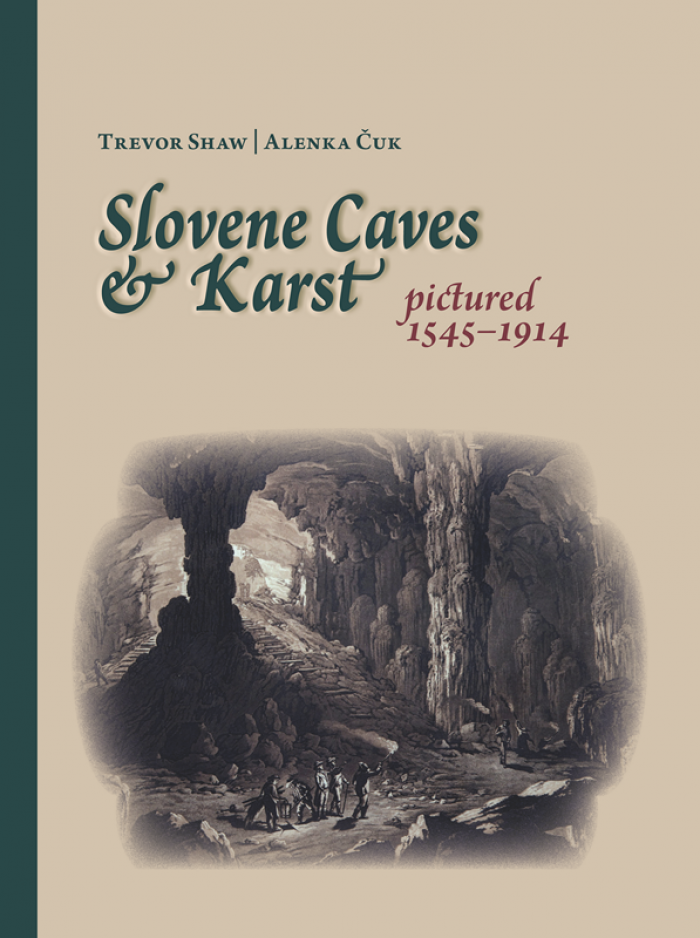
The caves and dramatic limestone scenery of the Slovene karst have attracted visitors for centuries. The great stalagmites and roaring underground rivers were seen by relatively few people at that time but many of them did record their experiences in diaries as well as in print. These are used in the book, which is a result of a long-time collaboration between an English historian of speleology and a Slovene historian, to describe what they saw and what they thought about it, with contemporary illustrations by contemporary artists and photographers. Modern tourism derives from the tours led by Thomas Cook who first came to Postojnska jama in 1868. Music in that cave has a very long history for dancing or concerts. This is only one example of the relation between caves and people as a constant theme in this book. Altogether the 39 chapters describe, for example, the problems facing all travellers in pre-railway days and point out that one of the very first women to explore difficult caves did so at Skocjan. Also touched upon is Darwin's interest in Slovene cave animals and a lot more.
good knowledge of the natural and cultural heritage of karst is a precondition for the rational planning of life on it. We try to organize the knowledge to make it as useful as possible for planners. We are involved in individual projects related to the regional planning, water supply systems, the construction of transportation infrastructure, the closure of landfills in karst areas, the collection of data on karst caves and their protection, karst ecology and determining the extent of human influence on the karst underground. A new book series Karstology and development challenges on karst was designed to present the results of completed and new projects to a broader public. The first book with the subtitle Water contains selected directly applicable research studies on karst waters, their characteristics, endangerment, and protection. It is composed of ten chapters, which can be grouped into three main themes. In the introduction the importance, characteristics and vulnerability of karst aquifers are presented,then various case studies of pollution and endangerment are described (traffic, landfills, military objects, flooding), and at the end some guidelines for the protection of karst water sources are summarized. The book is a bilingual publication in Slovene and English. It is aimed at a broad circle of users, researchers, students and planners.
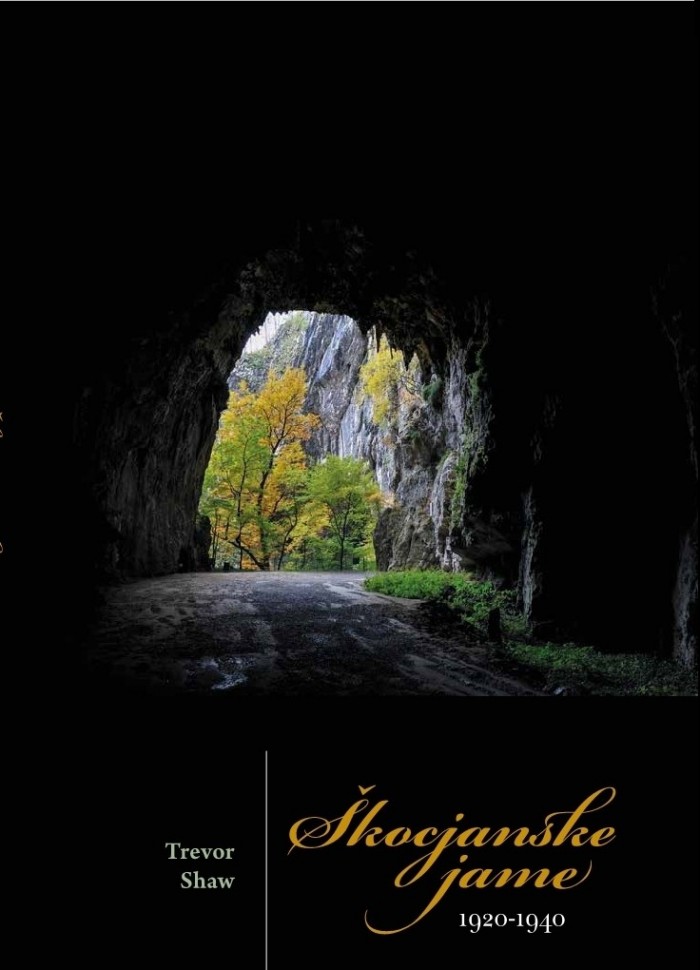
By Trevor Shaw, 2018. The cave Škocjanske jame has a long history of which the relatively short period between the two World Wars is the subject of this book. The area had just been transferred from Austria to Italy. Most of the cave had been explored before 1914 so the objective in the 1920s and 1930s was mainly to develop it as a tourist cave. Visitors had been accepted earlier but the emphasis now shifted to developing the tourist route through the cave, with new bridges and pathways as well as a new tunnel to the surface. The need for all arrangements to be formalized under Italian law caused problems and the re-opening of the cave to the public was delayed until 1923. Besides this development work, some exploration took place, new surveys were made and there were scientific studies. A little-know fatal accident is reported. Throughout the whole period the personalities of the individual guides, explorers and managers lead to a very human story as well as an exciting one. What helps to make this book so significant is the immense input from Italian archives, archivists and historians.
Preface
Acknowledgements
1 Introduction 2 Problems of Changing Nationality 3 Development as a Tourist Cave in the 1920s 4 Further developments, in the 1930s 5 Exploration by Austrians in 1921 & 1922 6 Federico Prez in 1922 7 Bertarelli’s Exploration in 1923 8 Surveying in Škocjanske jame 9 Images of the Cave – Models, Paintings & Photographs 10 Postal System and Postcards
Appendix: Equivalent Place-Names in Italian, German & Slovene
The karst regions of Slovenia, like those in many other parts of the world, result from the rock being limestone which is slightly soluble in rainwater. This not only causes a lack of surface streams and the presence of caves and underground rivers, but also other features characteristic of karstic landscape. In particular, solution of intersecting fissures in the rock results in cone-shaped depressions – dolines – in which some residual soil collects, and more is sometimes added by farmers to allow cultivation. Bigger, often vertical-sided depressions called collapse dolines result when the ground surface collapses into caves or cavities formed by underground streams. Collapse dolines include the immense pits at Škocjanske jame.
What is unusual about Slovenia is the amount of karst terrain that it contains. 43% of the whole country is karst; and of the part of Slovenia which was the old Austrian region of Carniola or Krain (Gorenjska, Dolenjska and Notranjska, including the Postojna area), 69% is karst.
The caves and spectacular features of karst have for centuries appealed to visitors and travellers, as they do to tourists today. For much the same reasons they have appealed to artists whose desire was to capture the scenes for themselves and for posterity.
Over the last two centuries or so we have become more and more accustomed to images of the real world. In modern times natural history films have become almost a substitute for the real thing. Personal cameras record what we have seen, sometimes more reliably than our memories, and magazines as well as television provide accurate pictorial information.
But it was not always so. Some five and a half centuries ago, printed books began to appear, providing information for those who could read. At first very few were illustrated, but about 430 years ago Valvasor was already producing his book on the castles of the province of Krain, illustrated with copper engravings; and ten years later, in 1689, there appeared his great topographical book on Krain, containing 535 illustrations. Painters of course did not depend on books to have their paintings displayed. But in later times their work was reproduced in books and reached a much wider audience.
At the same time, as technical developments made such reproduction easier and cheaper, the population increasingly learned to read. Poverty overall reduced and more people were able to enjoy leisure. This, with education, allowed them to use books and to see pictures other than those in the stained glass windows of churches.
This broadening of the kinds of readers, as well as an increase in their numbers, led quite early in the 19th century – only two centuries ago now – to the appearance of popular illustrated books aiming to arouse and satisfy curiosity. Titles such as The Wonders of Nature and Art (1803) and The Hundred Wonders of the World (1818) make this clear. Such books often include cave descriptions, many of them illustrated, and it was in this way that people living in non-karst regions became aware of the existence of caves.
So much for generalizations and context. What did all the images aim to do? One or more of the following, surely: to express the impressions, emotions and feelings of the artist; to inform people about caves and karst features; to give pleasure, by beautiful paintings or by luxurious albums of engravings; to illustrate texts (travel books, regional descriptions and guidebooks, scientific studies, accounts of cave exploration, historical studies, studies of cave images); to publicise particular caves and to advertise an unrelated product by an attractive picture.
Whilst scientific or geographical studies may require images of little-known caves or phenomena, it is clear from the content of this book that certain caves were more often the subject for artists and photographers than others. Several factors are responsible for this. Clearly an attractive cave, as the very word denotes, attracts more attention. A picturesque scene attracts pictures. And such pictures attract purchasers.
Also relevant is the extent to which the cave or place is already known. The better known places will be visited by more artists and photographers, and by more potential purchasers. Purchases, of course, include not only individual images but also illustrated guidebooks.
Another factor besides picturesque beauty affected this popularity of a place, especially before the motor car became widely available. That was its location and ease of access for large numbers of people. For Slovenia, many potential visitors were to be found at Trieste (as a major part where they waited for their ships) and on the main routes such as the vital road from central Europe through Postojna to the coast. Hence the popularity of Vilenica, Škocjanske jame and Postojnska jama. They attracted the artists and photographers, and they also attracted the visitors who would buy their productions.
Among the many cave images known, some (only a few, but nevertheless some) do provide information that is historically important. Dress is necessarily shown wherever there are people. That of the visitors is normal for the period and sometimes it is the dress that helps to date the image. Images of cave entrances necessarily record whatever barriers, gates, seats or buildings that were present at the time.
The earliest images of karst features occurred on 16th century maps, where the land was represented, not by accurately surveyed rivers, roads and contour lines, but by pictorial representations. Some of these were symbolic, such as trees for forests and little hills for mountainous county. But special features (and Cerkniško jezero was certainly considered very special) were drawn individually and the space required for this gave them extra prominence.
Individual pictures were sold for display, as indeed they still are. Such engravings were sometimes published together in albums, with or without text, as fore-runners of modern coffee-table books. The emphasis there was on attractive images, whereas later in the century pictures were used to illustrate points made in the text, for example in the books of Martel and Kraus or to illustrate places described in guidebooks.
Engravings, where the artist’s image was redrawn by the engraver on a metal plate (or lithographs where it was redrawn in stone) were still used to illustrate books and magazines up the 1890s. In that period the “artist’s image" to be engraved was often a photograph. Only when the half-tone process was developed in the 1880s, was it possible for photos to be transferred mechanically to paper in large quantities without an intermediate process.
In those earlier days (1870s to 1890s) photographs were usually engraved for publication. But the reverse also occurred. Photographers realized that cave pictures were saleable, but they found also that they were very difficult to take.
Copying was not only done to facilitate reproduction of images. It also occurred, without acknowledgement, when the easiest source for a new (saleable) illustration was an earlier one. In book publication (and ship capture) this is termed piracy. It was common in the 19th century and several examples are exposed in this book.
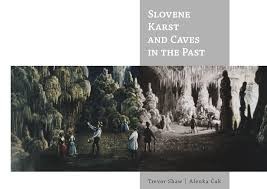
Of course, cave images of quality continued to be made after the cut-off date for this book – the start of World War I and the end of Slovenia’s time as part of Austria. Photographers include Friedrich Oedl (1894-1969) at Škocjanske jame in 1921, Franci Bar (1901-1988) in many caves, and several members of the Društvo za raziskavanje podzemskih jam. All those photographers were cave explorers themselves. Painters of this later period include Leo Vilhar (1899-1971); Mario Vilhar, his son (born 1925), and Lojze Perko (1909-1980). By Trevor Shaw and Alenka Cuk, 2012.
This bilingual scientific monograph with many illustrations presents the Velika Pasica cave, located on the outskirts of the Gornji Ig village on the Krim massif, around 20 km south of Ljubljana, Slovenia. The book presents ecological, taxonomical and biodiversity studies, as well as morphological and historical facts referring to the cave. The cave is small for Slovenian standards, as it is only 105 metres long. On the basis of the specimens collected in the cave, 13 new species from terrestrial and aquatic habitats have been described so far. A considerable number, even on the global scale. The cave was first renowned for the rare cave-dwelling beetles, snails as well as other species. In 2000, a rich community of aquatic animals was discovered, which were not expected to be present there. Since 2006, there have been regular measurements of ecological parameters as well as sampling of fauna from four permanent drips. Fauna was washed-out from a thin layer of dolomite, from which the cave roof consists. The measurements include water and air temperature as well as discharge, measured in one hour intervals. Furthermore, 88 analyses of drip water and an equal number of fauna sampling were conducted. The measurements in the cave were being conducted simultaneously with the measurements of the meteorological parameters on the surface, in the immediate vicinity of the cave entrance.The first book with the subtitle Water contains selected directly applicable research studies on karst waters, their characteristics, endangerment, and protection. It is composed of ten chapters, which can be grouped into three main themes. In the introduction the importance, characteristics and vulnerability of karst aquifers are presented,then various case studies of pollution and endangerment are described (traffic, landfills, military objects, flooding), and at the end some guidelines for the protection of karst water sources are summarized. The book is a bilingual publication in Slovene and English. It is aimed at a broad circle of users, researchers, students and planners.
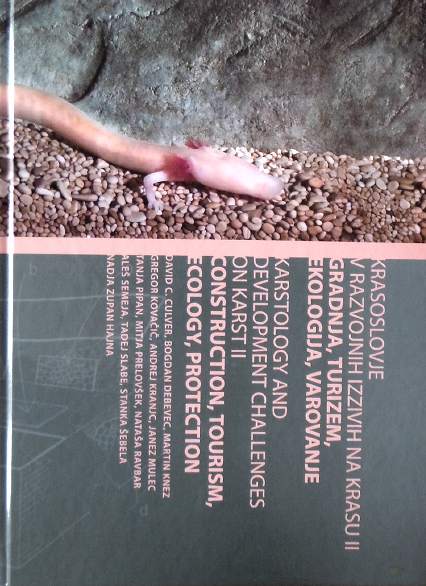
Karstology in Development Challenges in the Karst brings together the findings obtained in planning and construction of motorways in the Karst. More than 350 new caves were opened up in the final wave of construction. This was followed by studies on arranging karstic features for tourism and their management. We also selected studies on karstic ecology, in which we made use of biological and microbiological research. At the end there is a summary of everything we need to take into account in planning different encroachments in karstic areas. In English and Slovenian. By David C. Culver, Bogdan Debevec, Martin Knez, Gregor Kovacic, Andrej Kranjc, Janez Mulec, Tanja Pipan, Mitja Prelovsek, Natasa Ravbar, Ales Semeja, Tadej Slabe, Stanka Sebela, Nadja Zupan Hajna, Gregor Kovacic. 2011. 199 pages.
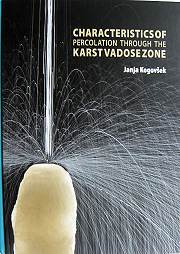
The study of the vadose zone has been based on 35 years research of underground water circulation and the transfer of contaminants in karst and on continuous long-term measurements and analyses of precipitation on the surface and of several representative trickles in the vadose zone of Postojna Cave over consecutive hydrological years and it offers an explanation of the dynamics of the percolation of water and simultaneous transfer of contaminants and their impact on the dissolution of carbonate rock in the vadose zone. Emphasis is placed on a multi-parameter approach based on the simultaneous use of a number of different methods, not only tracing natural tracers but also tests with artificial tracers using different methods of injection. The research contributes to the understanding of the role of the vadose zone in the karst aquifer. In English. By Kogovsek. 168 pp., sb.
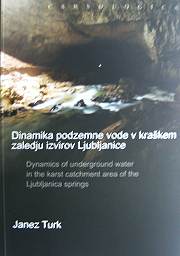
Based on a several years long record of water levels and temperatures in caves between Planinsko polje and the springs of Ljubljanica. Correlation between the data, the discharge of the Unica river and the meteorological data gave new insights into the groundwater dynamics in relation to the recharge events as well as into the hydrological role of Planinsko polje. The work clearly demonstrates caves as important observation points in karst hydrology.
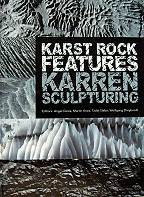
Hardback, 561 pages. Rock features are important traces of the formation and development of karst surface. On various karren their record is especially rich, revealing to us the many factors that in diverse conditions formed the karst surface on various carbonate and other rock.
We have tried to present the most characteristic rock features and through them the most important factors and processes in the formation of the karst surface, the methods of studying them, and the most outstanding examples.
Forty-nine contributing authors offer a wide spectrum of content and examples of rock forms from many karst regions around the world.
The first part of the book offers an orderly-organized survey and description of the most characteristic rock forms and presents the physical and chemical corrosion of rock, biocorrosion, the modeling of rock forms, their detailed morphometrics, and numerous descriptions of individual rock forms. The second part is devoted to various examples of rock forms found around the world from Slovenia through North and South America to Australia and Asia. Edited by: Angel Ginés, Martin Knez, Tadej Slabe, Wolfgang Dreybrodt, 2009. Hardback, 20,5×27,5 cm, 561 pages.
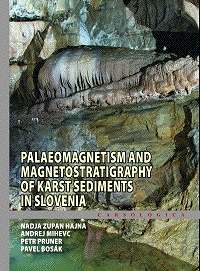
The aim of this book is to set out the results of common Slovene-Czech researches during10 years when karst superficial and cave sediments grouped according to age and depositional environment in various geographical and geological regions of Slovenia were intensively researched mostly by different palaeomagnetic methods. Palaeomagnetic sediment researches have brought surprising results related to the age of sediments both on the surface and underground and consequently also the first detailed information about the age of caves and indirectly the age of our karst. By comparing these data the time of sedimentation is obtained. At sampling the sediments for palaeomagnetic analyses we found in some cases the fossil remains of fauna; these findings are very important as they allow setting out the palaeomagnetic and magnetostratigraphic analyses into precisely defined time.
The introductory part describes the problem of cave sediments dating and their importance at explaining speleogenesis and karst genesis. This part is followed by a detailed presentation of the bases of palaeomagnetic method and magnetostratigraphy in particular related to way of sampling loose sediments and flowstone. In the flowstone the magnetic record is very weak as it contains a tiny bit of iron only; the devices in the laboratory were adapted to measure weak magnetization.
A large part follows containing 21 locations, 19 in Slovenia and two on the other side of the border in Italian Karst where various sediments were analyzed by palaeomagnetic methods. Each location is placed in space describing geological, karstological and speleological properties. A precise description of studied sediment profile with lithological and mineralogical composition follows obtained by various research methods. Every profile contains also the palaeomagnetic results with magnetostratigraphic and palaeomagnetic properties. There, where fossils were found they are paleontologically defined. The description of results is followed by interpretation and discussion about the age of sediments.
An important part of this book treats the significance of performed researches for the development of the dating method. Palaeomagnetic dating method is comparative, meaning that for definition of absolute sediment age we need additional data provided by other methods. The problems occurring when analyzing the sediments in karst caves due to their specificity are described as well as technical solutions of problems. A survey of achieved dating is added as well as their importance to understand the development of caves and karst in Slovenia, for development of surface and for time definition of known tectonic events.
The book is interesting for scientists and experts dealing with karstology, speleology, quartarology, paleontology, geomorphology and geophysics who are engaged in palaeomagnetic dating methods and magnetostratigraphy. This book offers new comprehension from all the mentioned research topics important both for Slovenia (understanding of its geological history, surface development and age of karst) and the international scientific sphere; with the concrete results the book is an important contribution to the science of karstology, geology, geophysics and structural geology. 2008, Nadja Zupan Hajan, Andrej Mihevc, Petr Pruner, Pavel Bosák. Paperback • 20×27 cm • 268 pages • 282 pictures and 81 plate.
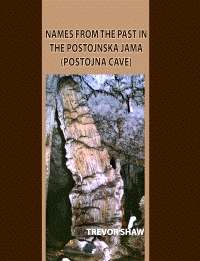
Very many of the place names in the caves derive from natural, architectural and other familiar objects such as animals, birds, plants, rain, parts of churches, curtains and human anatomy. 370 individual places in the Postojnska jama cave system have been given names over the centuries, usually in three or more languages. The tabulated list forming the main body of this book lists all these names, together with locations and the period for which each name is known to have been used. By Trevor Shaw, 2006, 151 pp., paperback.
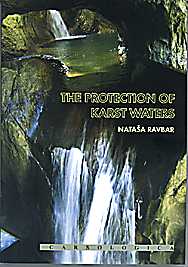
Drinking water is a vital need but nevertheless it is not available to everybody neither by quantity nor quality. Karst aquifers hold important water resources, but are also very sensitive against the pollution. Therefore the passive and active protection is increasingly important, among these the education of inhabitants as well as new and better technical solutions have to be evolved.
The work of Nataša Ravbar is important from both points of view. Results of the inquiry related to the attitude of the local people towards water show its stage in the karst regions of Slovenia. On the other side the concept of groundwater vulnerability is increasingly used for karst water protection worldwide. Based upon a detailed review of different methods used or even obligatory in Europe, the author proposes a new methodology of groundwater vulnerability and risk mapping for the protection of karst sources – the Slovene Approach.
The Approach has been successfully applied and verified in the catchment of the karst spring Podstenjšek at the foot of the Sneznik mountain (Southern Slovenia). A wide range of different geomorphological and hydrological methods and techniques, including monitoring of the karst spring, hydrochemical analyses, tracing of underground water and geophysical survey have been applied. Hence, a better understanding of the regional hydrogeology has been achieved.
The monograph is useful for practitioners and decision-makers dealing with the protection and management of karst groundwater resources, and for scientists doing research on karst hydrogeology and vulnerability mapping. It is a valuable source of information and inspiration for further works dealing with karst groundwater protection in Slovenia and elsewhere. By Natasa Ravbar, 2007, paperback • 17×24 cm • 256 pages • 138 pictures and plate.
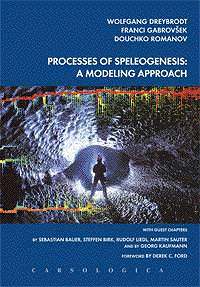
This book draws together the major recent advances in the modeling of karst systems. Based on the dissolution kinetics of limestone, and flow and transport processes in its fractures, it presents a hierarchy of cave genetic situations that range from the enlargement of a single fracture to the evolution of cavernous drainage patterns in confined and unconfined karst aquifers. These results are also applied to the evolution of leakage below dam sites in karst. The book offers a wealth of information that help to understand the development of cave systems. It addresses geologists, hydrologists, geomorphologists, and geographers. It is also of interest to all scientists and engineers who have responsibilities for groundwater exploration and management in karst terrains. A CD including all figures figures from the nook and numerous animations presenting the results is enclosed. Paperback o 17x24 cm o 376 pages o CD-ROM o 250 pictures and 8 plates. By Wolfgang Dreybrodt, Franci Gabrovsek, Douchko Romanov.
The main topic of this monograph is the weathering of carbonate rocks on the walls of cave passages. Of particular interest were the characteristics and peculiarities of the limestone and dolomite weathering processes, the type of solution and why all of the carbonate rock does not dissolve immediately. The results of incomplete solution of carbonate rock are weathered zones that remain on the cave passage walls. The most are weathered cave passage walls soaked by percolation water at the contact with sediments and walls exposed to condensation corrosion. On cave passage walls strongly weathered limestone and dolomite remain only where they are protected from further dissolution and mechanical erosion. During weathering the rock gradually discolours and by increased porosity looses its mechanical strength. Mineral and chemical composition of the weathered zone is almost identical to composition of parent rock, yet it is much more porous. Soluble remain of the incomplete limestone solution is opposed to general theories of karst origin as they accepted the opinion that limestone dissolves if affected by aggressive solution. In described cases an incomplete dissolution may just prepare the carbonate rock for the mechanical transport of its weathered particles by the flowing water. The transported carbonate particles of silt or clay size may accumulate in the cave passages as clastic cave sediments. In any case the speed of water flow must correspond to the rate of weathering in order to tear exposed particles from the rock surface. 2003, 154 pp., 133 color and b/w photos, 170 x 240 mm, paperbound.
The book brings the analysis of relations between recharge and discharge of karst aquifers, i.e. input and output functions of karst system, which can be applied in order to define the characteristics of its functioning. Three different recharge-discharge models were set up. The functioning within the system was expressed by the transfer function between the input and the output signal, and the adequacy of individual models was evaluated according to the accuracy of the simulation, which is related to the transfer function's ability to reproduce discharges, on the basis of which it was determined. The improvement in the model's results, brought about by the introduction of the effective infiltration function instead of the precipitation, highlighted the significant influence exerted by the vegetation and processes in air and in the soil on the quantity and the temporal distribution of actually infiltrated water. Additionally, a specific hydrodynamic function of epikarst was proved, which, due to its typical structure, influences the temporal distribution of recharge. By Metka Petric, 2002. Paperback, 17x24 cm, 154 pages.
The book presents the application of numerical modelling in study of early speleogenesis. First part discusses the evolution of a single fracture in various hydrological, geochemical and geological settings. Numerical results are compared to more general, analytical results. Understanding the evolution of a single fracture, serves as a basic block for the interpretation of more complex models, such as the models of confined and unconfined two dimensional fracture networks. These models are described in the second part of the book. The results support some of the conceptual speleogenetic models, and suggest new mechanisms which might be active in early speleogenesi. By Franci Gabrovsek, 2000, 17x24 cm, 150 pages