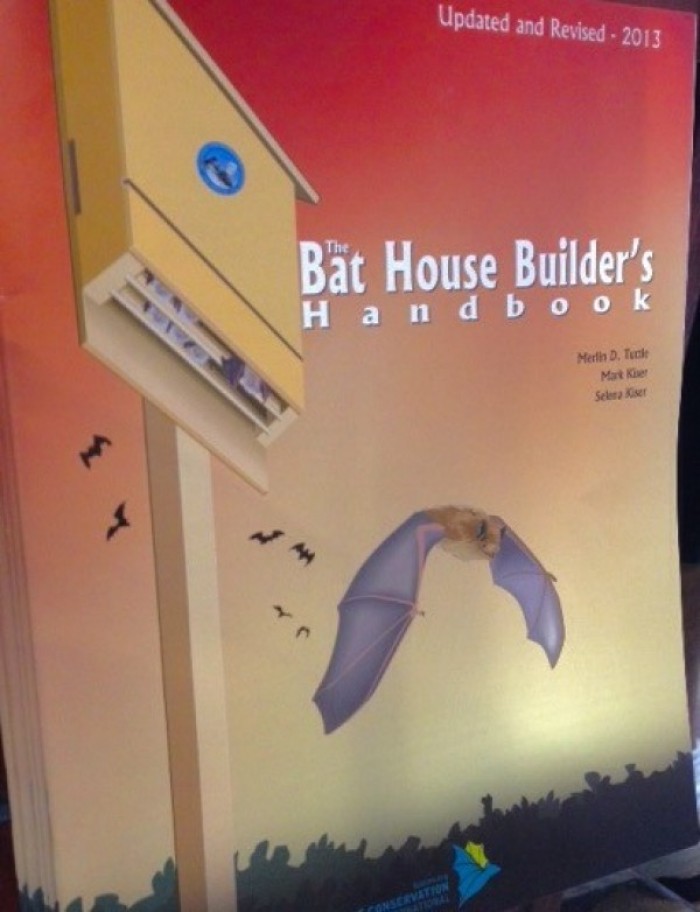
America's bats are an essential part of a healthy environment. Nevertheless, many bat species are in alarming decline, largely because of unwarranted human fear and persecution and the loss of natural roosts. You can help by putting up a bat house. You'll benefit directly from having fewer yard pests and will enjoy learning about bats and sharing your knowledge with friends and neighbors. Few efforts on behalf of wildlife are more fun or rewarding than helping bats. 32 pp, Paperback. By Merlin D. Tuttle, Mark Kiser, and Selena Kiser.
Updated 2013 edition. The Bat House Builder's Handbook has been the definitive source for bat house information. As primary predators of night-flying insects, bats play a vital role in maintaining the balance of nature. By consuming vast numbers of pests, they rank among humanity's most valuable allies. Just one little brown myotis can catch a thousand or more mosquito-sized insects in an hour, and a colony of 150 big brown bats can catch enough cucumber beetles each summer to prevent egg laying that otherwise could infest local gardens with 33 million rootworms. Cucumber and June beetles, stinkbugs, leafhoppers, and cutworm and corn earworm moths--all well-known pests--are just a few of the many insects consumed by these frequent users of bat houses. In addition, many pests flee areas where they hear bat echolocation sounds. Our immediate goal is to preserve America's most widespread species in sufficient numbers to maintain nature's balance and reduce demands for chemical pesticides. Thanks to a decade of BCI-sponsored bat house research we are now able to accommodate 14 species of North American bats in the bat houses described in this handbook, including threatened and endangered species such as the Indiana myotis and Wagner's bonneted bat. Bat houses are being used from Mexico and the Caribbean to British Columbia and Newfoundland.
Best of all, if you carefully follow instructions, your odds of success exceed 80 percent. Isn't it about time to extend a helping hand in exchange for a healthier neighborhood?. Merlin Tuttle and his colleagues at Bat Conservation International at work. Bats fly the night skies in nearly every part of the world, but they are the least studied of all mammals. As the major predator of night-flying insects, bats eat many pests. Unfortunately bats are facing many problems, including a terrifying new disease. White-nose Syndrome is infecting and killing millions of hibernating bats in North America. But Dr. Tuttle, with the help of his fellow bat scientists are in the trenches--and caves--on the front line of the fight to save their beloved bats. For ages 10+. By Mary Kay Carson with photographs by Tom Uhlman. PB, 80pp.
wenty-eight bat-oriented activities help teach writing, communication skills, math, art and more. By Jane F.G. Jennings. Softcover. (30 pages). Suitable for Ages 5-10.
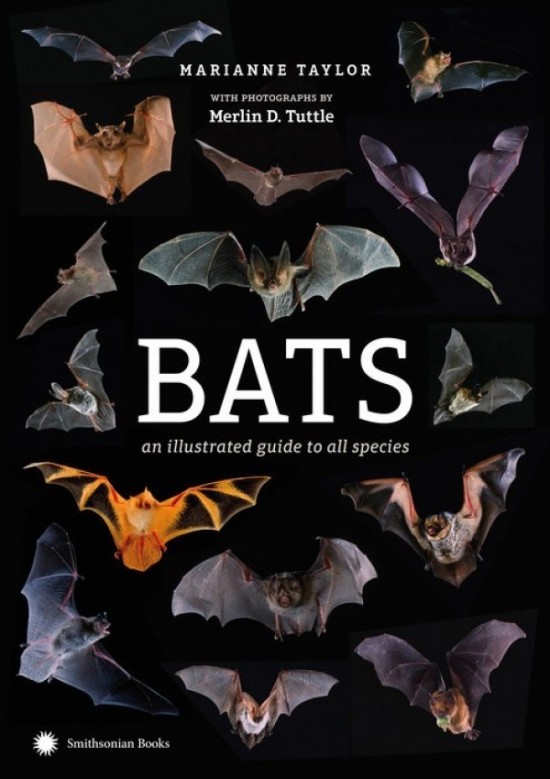
By Marian Taylor. Explores bats and their fundamental role in our ecosystems through lavish full-color photographs and lively narrative. From the Giant Golden Crowned Flying Fox, a megabat with a wingspan of more than five feet, to the aptly named Bumblebee Bat, the world's smallest mammal, the number and diversity of bat species have proven to be both rich and underestimated. Nocturnal, fast-flying, and secretive, bats are difficult to observe and catalog. This richly illustrated handbook presents bats' evolution, biology, behavior, and ecology. It offers in-depth profiles of four hundred megabats and microbats and detailed summaries of all the species identified to date. Complete with an introduction exploring bats' natural history and their unique adaptations to life on the wing, Bats includes close-up images of these animals' delicate and intricate forms and faces, each shaped by evolution to meet the demands of an extraordinarily specialized life. Hardcover, 400 Pages.
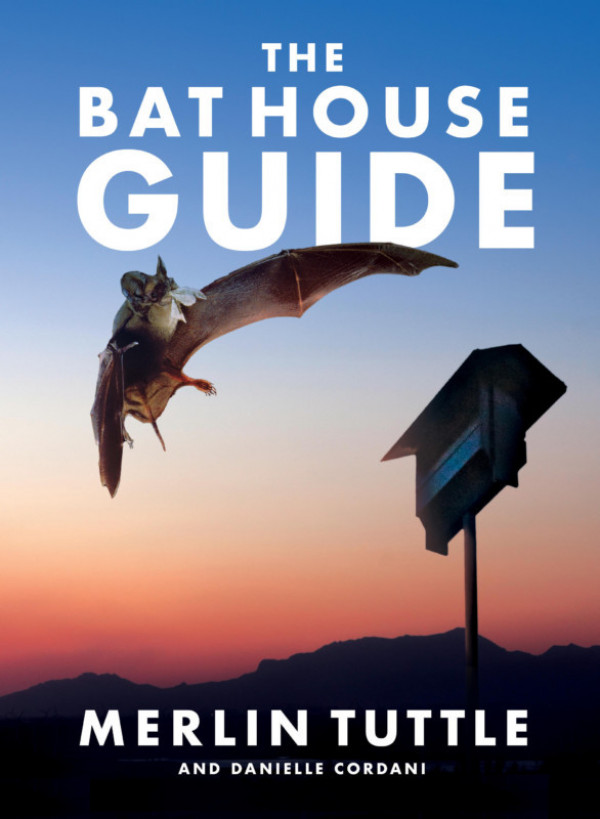
By Merlin Tuttle & Danielle Cordon, 2022. Hardbound. Why build bat houses? Because bats are essential. They protect our crops, reduce use of pesticides that can cause cancer and dementia, and even help protect us from mosquito-borne diseases such as West Nile. However, they are in alarming decline, often due to loss of natural roosts.
Armed with this handy guide from Merlin Tuttle's Bat Conservation (MTBC), you can have fun helping both bats and your neighborhood. We summarize decades of discoveries by more than a dozen leading experts to provide step-by-step instructions and diagrams for their favorite designs. Some of their conclusions will surprise you.
Whether you buy or build bat houses, your success will improve when using this guide. Follow the building advice or look for vendors who meet the high standards required to gain MTBC's Seal of Approval. And if you achieve exceptional success, or even unexplained failure, let the authors hear from you at MerlinTuttle.org.
Most of all, enjoy your bats and share your experiences with friends and neighbors!
Dr. Merlin Tuttle has studied and photographed bats worldwide for more than sixty years. He founded and led Bat Conservation International (BCI) for nearly thirty years, then left BCI in 2009 and founded Merlin Tuttle's Bat Conservation (MTBC).
Dr. Tuttle has published his classic research on bats in leading journals, contributed five articles to National Geographic, and lectured at institutions of science, from Harvard and Princeton Universities to the Smithsonian and British Museums. He is recognized as the father of modern bat conservation and is credited with saving the now famous Congress Avenue Bridge bat colony in Austin, Texas from extermination.
His unique photography and communication first led to the global appreciation of bats as safe, invaluable, and even adorable and likable creatures. No one has better demonstrated the power of combining captivating photos with sound science to win friends instead of battles for bats. Nor has anyone better demonstrated how conservation can benefit humans. Tuttle's legendary photos and experience provide invaluable guidance and inspiration that must be preserved and shared for future generations.
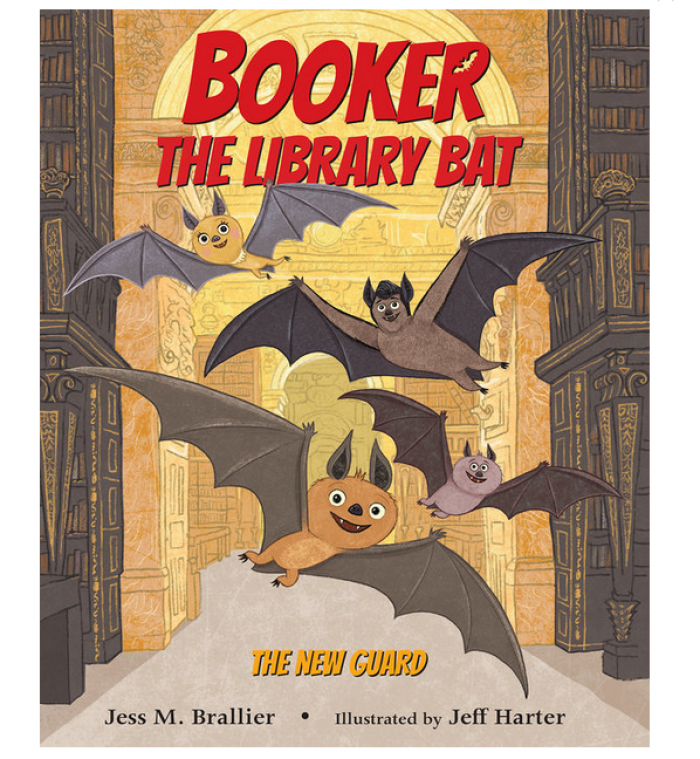
The launch of a picture book series about the adventures of a book-loving bat and his buddies as they patrol and protect their library home. Hardcover, 32 PP.
Booker the bat has completed his training and he's excited to report for duty as the newest guard at the Joanina Library in Coimbra, Portugal. His job is to fly through the stacks at night, gobbling down the bugs that are in turn eating the 200,000 antique leather books. It's the perfect job for Booker, because he loves to read. And now he's saving books!
There's only one problem: how will he fit in with the other guards? They're so cool and confident, and what if they don't like him? But when Booker spots a human attempting to steal pages from one of the valuable books, he summons his courage, (echo)locates the other bat guards, and swoops in with a plan to save the day!
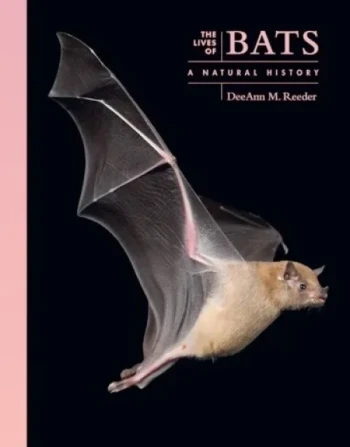
Author DeeAnn M. Reeder is professor of biology at Bucknell University and conducts bat research and conservation activities in both North America and Africa.
Bats are the second-largest order of mammals and inhabit almost every corner of the globe, but these secretive creatures are often maligned and misunderstood. With more than 1,400 species worldwide, they are crucial contributors to ecosystems, controlling insect populations and fulfilling an essential role as pollinators. This one-of-a-kind guide showcases the unique characteristics and extraordinary diversity of our planet’s bat life, providing an inviting introduction to these marvelous creatures. Written by a leading expert and packed with the latest scientific findings, The Lives of Bats blends diagrams and stunning photographs with in-depth coverage of profiled species to offer an incomparable look at these unsung heroes of the natural world.
Includes a wealth of stunning color photos
Features dozens of representative species profiles that demonstrate the remarkable diversity and adaptability of the only mammals on Earth capable of powered flight
Covers key topics such as anatomy, echolocation, diet, thermoregulation, mating, diseases, and immunity
Discusses human relationships with bats
Essential reading for wildlife lovers everywhere
Published: Mar 25, 2025
Pages: 288
Size: 7.5 x 9.5 in.
Illus: 150+ color illus
Price: $35.00
Get in touch
Questions about an order, a title, or whether we carry something specific? We're happy to help.