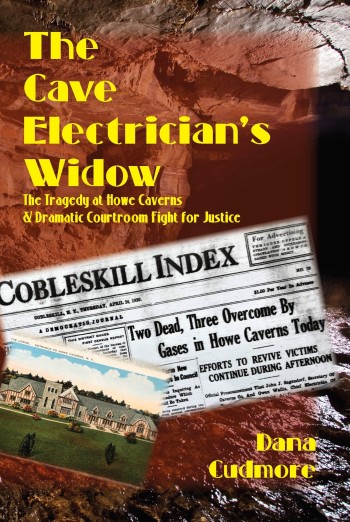
World-famous since the mid-1800s, Howe’s Cave had been modernized for visitors in 1927-29 with an elevator entrance, clean paths, and electric lights. A grand reopening on Decoration Day, 1929 made Howe Caverns, Inc. one of upstate New York’s most popular tourist destinations.
Less than a year later, two of the new corporation’s employees died in the cave under baffling circumstances in the early morning hours of April 24, 1930. They collapsed near the postcard-worthy formation the Bell of Moscow.
At 5 a.m. that same morning, 7½ tons of dynamite knocked 60,000 tons of limestone from the hillside at the old cement quarry, just southeast of the cave. Had fumes from the blast found their way through the maze of caverns’ passages and killed the men more than a half-mile away? Or had it loosened dangerous gases lurking in the cave for eons?
This is the untold story of that tragedy: the rescue attempts, the investigation and coroner’s report, and finally, the legal recourse sought by the widows of the two men. Much of the story is told in vivid, first-hand accounts taken from court records of one of the cases. The testimony—by rescuers, cave experts, quarrymen, explosives engineers, doctors, and chemists under the dueling questioning of the widow’s attorney and his adversary —unravels the mystery of who was responsible and illuminates unfamiliar avenues of the dark, remarkable cave. How will the jury decide?
The Cave Electrician’s Widow:The Tragedy at Howe Caverns & Courtroom Battle for Justiceis part David vs. Goliath; part mystery, part courtroom drama, part travelogue through the fascinating underground realm of the caverns, and much more.
Includes more than 20 photos and maps to recreate for readers the entire tableau of the 1930 tragedy – both above and below ground.
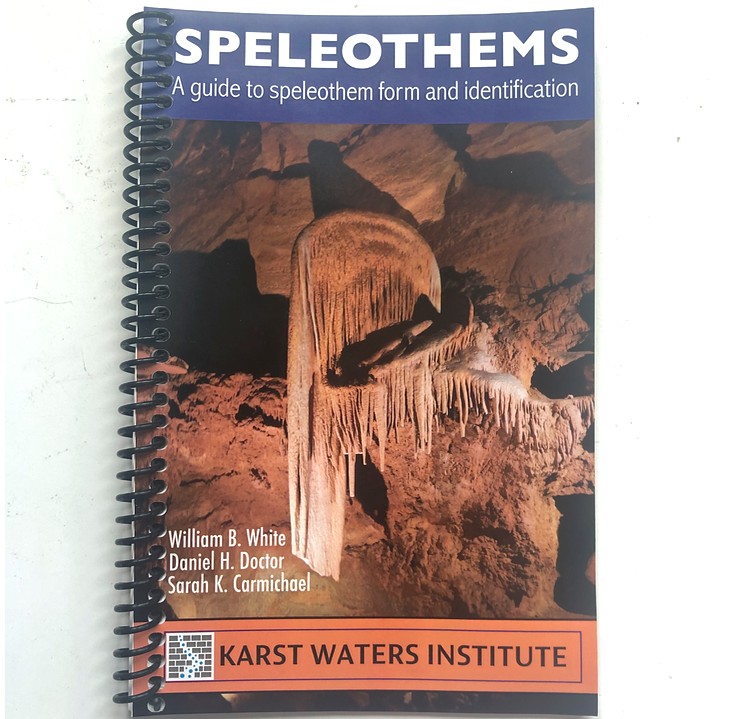
2024. From Karst Waters Institute. By William B White, Daniel H Doctor and Srah K Carmichael. 38 pp.
INTRODUCING THE ULTIMATE FIELD GUIDE TO SPELEOTHEMS from the scientists of Karst Waters Institute.
Almost anyone who ever took a cave tour learned the difference between stalactites and stalagmites, but can you tell anthodites from helictites? Moon milk from pool fingers? Bacon from boxwork? Just as illustrated guides help visitors identify flora and fauna of the surface world, Speleothems: A guide to speleothem form and identification provides cave visitors with descriptions and images of over thirty types of natural mineral deposits found in caves. Written by the cave scientists William B. White, Daniel H. Doctor, and Sarah K. Carmichael, this new publication of Karst Waters Institute describes not only the appearance and names of various speleothems, but the chemical (and sometimes biological) processes that create them. It is perfect for your next cave visit. While commonly called "formations" on cave tours, the term "speleothem" was invented in 1952 to distinguish cave deposits from geological strata which are also called "formations." Readers will learn to classify a wide variety of speleothems by appearance, method of formation, and common geographic locations. Speleothems also provides sources for additional information as well as instruction on how to protect and preserve these rare and delicate cave features. Budding geologists and curious visitors alike will gain deeper understanding of the magnificent world below in this beautifully illustrated and informative handbook.
MEET THE AUTHORS
William B. White William B. "Will" White, a member of the KWI Board since the its formation, has published more than 400 papers on cave and karst research. He is a fellow of the AAAS, the Mineralogical Society of America, and the NSS and spent 40 years teaching geology on the Penn State faculty. Daniel H. Doctor Dan Doctor is a research geologist with the U.S. Geological Survey specializing in karst. His research interests include the hydrology and geochemistry of karst aquifers, assessment of sinkhole hazards, evolution of Appalachian karst landscapes, and paleoclimate records from karst areas. Sarah K. Carmichael Dr. Sarah Carmichael studies "tiny minerals that tell big stories" as a professor of Fluid-Rock Geochemistry and Biomineralogy at Appalachian State University. She became a National Geographic Explorer in 2018 and in 2022 was named one of the Explorers Club 50--fifty people changing the world.
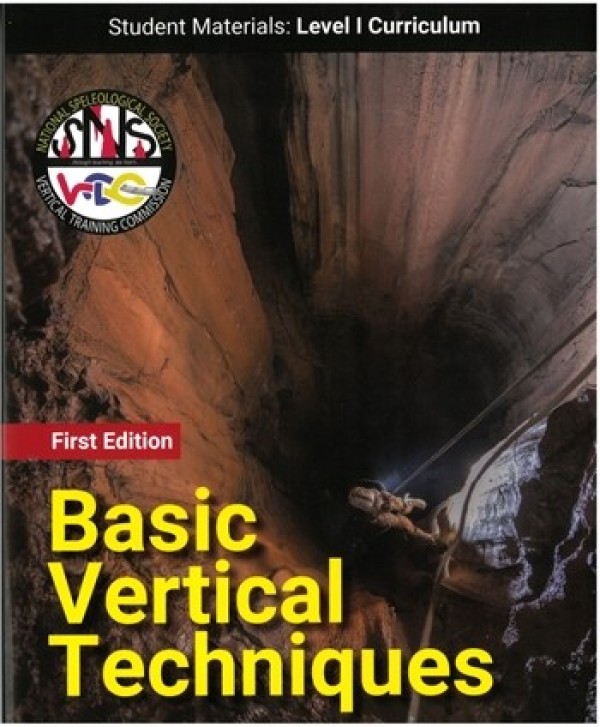
Following a number of avoidable caving incidents, the NSS Vertical Training Commission ("VTC") was chartered, in 2021. VTC's curriculum is designed to help interested individuals obtain the appropriate and sufficient competencies, critical thinking, and problem-solving skills needed to be safe while vertical caving with single-rope techniques. These materials are used in conjuction with a training program that provides hands-on experience while being accessible, attainable, and understandable to a diverse range of cavers. Also available in convenient lay flat spiral bound format.
VTC is based on a train-the-trainers model. Students who master the curriculum may later attend a trainer course, designed to prepare competent and active cavers to safely teach others at the grotto level.
This is the first edition of the student materials for the Level 1 Curriculum, "Basic Vertical Techniques."
A tender and true poetry collection about a man’s life, family, and surroundings. A lifelong caver, John's book includes two caving related poems.
Cole’s autobiographical poetry collection captures the author’s life from childhood to old age.
In this book of poems written between 1985 and 2023, Cole revisits his childhood, youth, adulthood, and senior years. The poet’s journey is divided into seven non-chronological sections. In his youth, Cole recalls carefree “days of play in woods & fields” (“mrs. ramsey”) in his home state of Kentucky. He writes of his father, an abusive and alcoholic “highly imperfect patriarch” who taught Cole that “that you can destroy your life / all on your own / and die bitter and sad and abandoned” (“what my father taught me”). Relatives are at the center of “ghost story,” in which Cole evokes a grandmother, “cumbrous, phlegmatic, laconic / uneasy amazon in her faded cotton dress.” The author gingerly recounts holding his longtime partner after death: “I lifted you / light as corn silk / and carried you / to the body bag” (“reunion”).The “La Pasada” section features 11 Spanish-infused poems set in Mexico, where “riotous birdsong awakens me / just before dawn watercolors / the palm-fringed horizon” (“birds of tlacotalpan”).The final, titular poem mourns the fleeting nature of all things: “there’s your Forever / for as long as you live / and then it too / is gone.” Cole’s blank verse style makes for an easy, breezy read that novice and seasoned poetry readers alike will enjoy. Characters are fully formed and come alive in his descriptions; there’s Mrs. Ramsey, “a hobbled crone in her ragged shawl / bent upon her walking stick,”and the author’s former roommate, Jenny, “beautiful, but haunted / violent, volant / as only dandelions / in their stubborn generosity / diligently dare” (“Jenny”). At over 250 pages, the collection could have used some pruning; some readers may also have preferred a chronological ordering of the poems.
A tender and true poetry collection about a man’s life, family, and surroundings - Kirkus Review
When small-town farmer and spelunking enthusiast Floyd Collins became trapped in a southern Kentucky cave in early 1925, the sensationalism and hysteria of the rescue attempt generated America's first true media spectacle, making Collins's story one of the most prominent of the century. The crowds that gathered outside Sand Cave turned the rescue site into a carnival. Collins's plight was front-page news throughout the country, hourly bulletins interrupted radio programs, and Congress recessed to hear the latest word.
With a new foreword by Tina Landau, bookwriter and director of the musical Floyd Collins, as well as a new afterword by Roger W. Brucker, Trapped! is a tense adventure and a brilliant historical re-creation of the past--a tale as enthralling today as it was when the event took place over one hundred years ago.
Robert K. Murray (1922-2019) was professor of history at Pennsylvania State University for more than three decades as well as a senior fellow in the university's Institute for the Arts and Humanities. His work includes The Harding Era: Warren G. Harding and His Administration, The 103rd Ballot: Democrats and the Disaster in Madison Square Garden, and the coauthored book Greatness in the White House: Rating the Presidents--From George Washington through Ronald Reagan.
Roger W. Brucker is a lifelong cave explorer and cofounder of the Cave Research Foundation. He is coauthor of several books, including The Longest Cave with Richard A. Watson, and is also author of Grand, Gloomy, and Peculiar: Stephen Bishop at Mammoth Cave and Mama Says, Don't Cave: Ergor's Unbelievable Cave Stories (under the pseudonym Ergor Rubric). 358 Pages, Trade Paperback.
----
An eye-opening look at the 1925 news story of Kentuckian Floyd Collins, trapped in a cave near Cave City.... Both a fine historical investigative piece and a compelling read.
~Kentucky Monthly
The tension and confusion of the days of rescue attempts are made real.... The abysmally tragic efforts to capitalize on an exhibition of the cave explorer's body is not omitted.
~The Augusta Chronicle
Trapped! puts into context the importance of exploration and the role of media in accurately reporting on the accidents that can happen in original exploration.... [It] illustrates the spirit of one man's curiosity, resilience, and deep commitment to humankind's drive for expanded horizons.
~C. William Steele, international cave explorer and author of Huautla: Thirty Years in One of the World's Deepest Caves
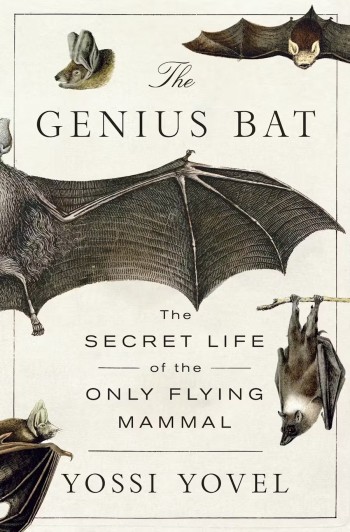
With nearly 1500 species, bats account for more than twenty percent of mammalian species. The most successful and most diverse group of mammals, bats come in different sizes, shapes, and colors, from the tiny bumblebee bat to the giant golden-crowned flying fox. Some bats eat fruit and nectar; others eat frogs, scorpions, or fish. Vampire bats feed on blood. Bats are the only mammals that can fly; their fingers have elongated through evolution to become wings with a unique, super-flexible skin membrane stretched between them. Their robust immune system is one of the reasons for their extreme longevity. A tiny bat can live for forty years.
Yossi Yovel, an ecologist and a neurobiologist, is passionate about deciphering the secrets of bats, including using AI to decipher their communication. In The Genius Bat, he brings to vivid life these amazing creatures as well as the obsessive and sometimes eccentric people who study them–bat scientists. From muddy rainforests to star-covered night deserts, from guest houses in Thailand to museum drawers full of fossils in New York, this is an eye-opening and entertaining account of a mighty mammal. 350 pp. Hardcover. 2025.
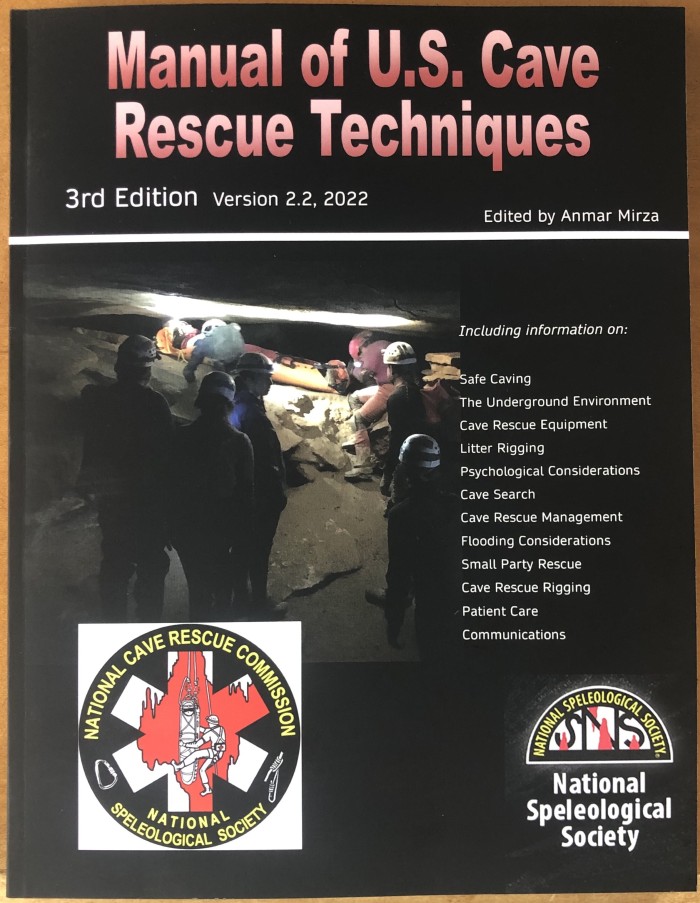
3rd Edition, Version 2.2, 2022. Edited by Anmar Mirza. Including information on safe caving, the underground environment, cave rescue equipment, litter rigging, psychological considerations, cave search, cave rescue management, flooding considerations, small party rescue, patient care and communications.
Out of print, USED BOOK. 1991. Edited by by Michael Ray Taylor. Published by Urs Widmer of Speleo Projects. A standard setting book and a classic in cave photography literature. Clean copy.
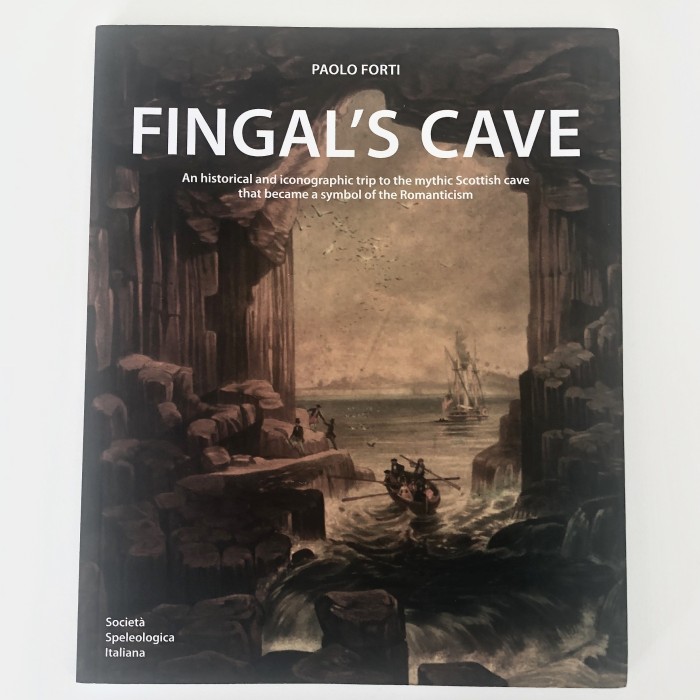
An historical and iconographic trip to the mythic Scottish cave that became a symbol of the Romanticism. With 145 objects from the collections of the "Franco Anelli" Speleological Documentation Centre - Bologna. 2021, 80 pp. 9 x 7 1/2 inches. English language edition.
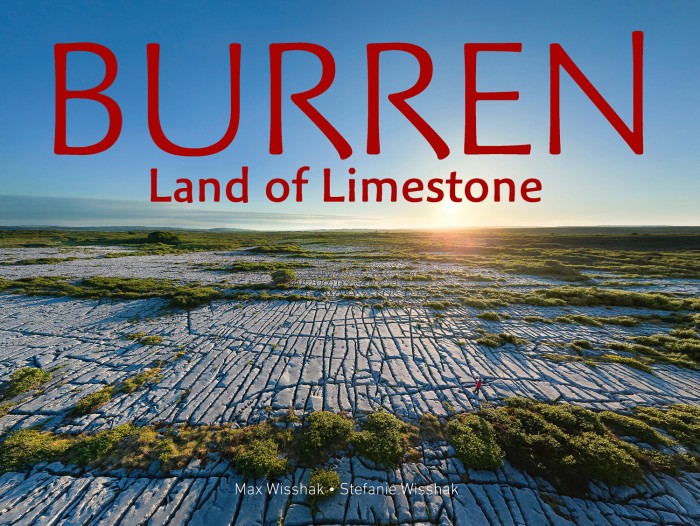
This coffee-table book showcases the captivating charm of an Irish karst landscape. In the Burren, limestone plays many roles, providing a unifying theme as we explore the area’s natural and cultural history, above and below ground.
On the windswept Atlantic coast of Ireland lies an intriguing landscape defined by sparse vegetation on bare limestone rock, smoothed by ice and sculpted by rain. This is the Burren, the heart of the Burren and Cliffs of Moher UNESCO Global Geopark. Its extraordinary glaciokarst terrain is home to an astonishing variety of plant and animal life, not to mention a rich geological and cultural heritage – all of which revolve around the limestone.
This book traces how rainwater shapes limestone pavements, how underground streams carve out caves that feed holy wells and ephemeral lakes, and how bare rock provides microclimates for archaic ferns and colourful orchids. It goes on to illuminate how communities used the stone beneath their feet to build megalithic tombs, cashels, tower houses, churches, and the vast network of drystone walls that climb the hills and support traditional farming practices in response to the harsh environment. Here, culture did not overwrite geology: it adapted to it.
Join us on a visual journey of discovery as we explore the Burren in all its facets, revealing the compelling beauty of this Land of Limestone.
Contents: Thirst in the Burren (poem) / Land of Limestone / Limestone Pavements / Wild Orchids / Archaic Fern / Sinkholes and Potholes / Caves and Underground Streams / Springs and Holy Wells / Loughs and Turloughs / Drystone Walls / Megalithic Tombs / Cashels and Castles / Churches and Graveyards / Behind the Scenes / Bibliography
Opening Poem: Moya Cannon
Author Bios:
Max Wisshak is a geoscientist in the field of marine research at the Senckenberg institute in Wilhelmshaven, Germany, and has published dozens of scientific articles and book contributions on this subject matter. Hi is also a passionate cave explorer, cave photographer, and publisher, who runs his own publishing label speleo-photo editions. Burren: Land of Limestone (2026) is his fourth premium coffee-table book on the subjects of and caves and karst, following Inside Mother Earth (2008), New Zealand Karst (2020), and Lechuguilla Cave (2022). His wife and coauthor Stefanie Wisshak is a geographer working as free-lance designer, writer, and text editor.
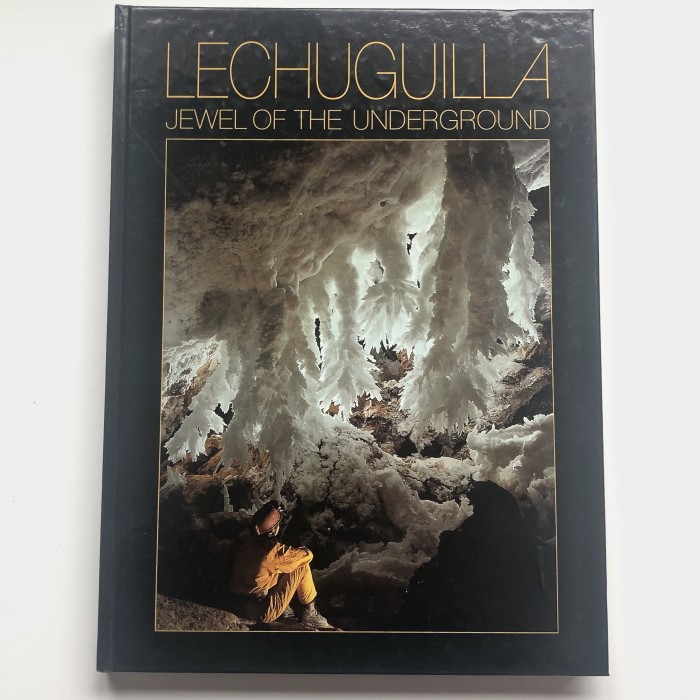
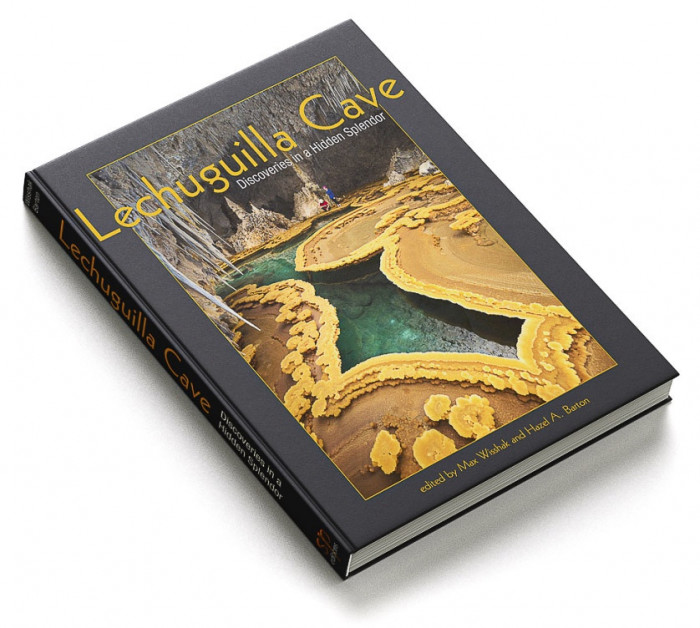
Lechuguilla Cave ( New Mexico, USA) is one of the most beautiful caves on Earth. Since its discovery in 1986, more than 240 kilometers of cave has been explored – with no end in sight. Owing to its geologic setting and unusual process of formation, the cave contains a remarkable diversity of rare minerals and formations, which have helped change our understanding of how caves form and the microbial life they can contain.
In this book, the most active explorers of the cave show the features that made it famous and reveal new discoveries in terms of beauty, scale, and science. Through their writing and photography, they take the reader on their journey of preparing for, and exploring, this remarkable cave. They describe how to successfully live and work in the underground, and highlight the challenges that must be overcome to discover and map new passages. An explanation of how the stunning imagery is captured takes the reader along in this visual journey of Discoveries in a Hidden Splendor. Finally, the extraordinary lengths undertaken to conserve Lechuguilla are illustrated, and how such efforts go hand-in-hand with exploration and photography to reveal the intriguing nature of this wonder of the underground.
Contents:Hidden Splendor (opening statement) / Fragile Beauty (foreword) / Greatness (foreword) / Beginnings (introduction and editors’ preface) / Discoveries / Speleogenesis / Speleothems / Water / Hidden Life / Preparation / Camp Life / Exploration / Mapping Mazes / Photographing Darkness / Rescue / Conservation / Best of the Best (closing remarks) / Fact Sheet / Bibliography / Contributors
Editors:Max Wisshak and Hazel A. Barton
Forewords and Afterword:Jonathan B. Jarvis, Rodney D. Horrocks, Peter Bosted, and Dale L. Pate
Text:Stan Allison, Andy Armstrong, Bonny Armstrong, Hazel A. Barton, Catherine H. Borer, Peter Bosted, Derek C. Bristol, Paul A. Burger, Beth Cortright, Jennifer Foote, Arthur J. Fortini, Donald G. Davis, Kevin Downey, Harvey R. DuChene, James F. Hunter, Daniel S. Jones, John T. M. Lyles, Aria A. Mildice, Arthur N. Palmer, Patricia E. Seiser, Jake Turin, Doug Warner, and Max Wisshak
Photos:Andy Armstrong, Bonny Armstrong, Daniel C. Austin, Hazel A. Barton, Peter Bosted, Derek C. Bristol, Dave E. Bunnell, Daniel Chailloux, Stephen Eginoire, Jennifer Foote, Kevin Downey, Rodolfo González, James F. Hunter, Brian K. Kendrick, Jean Krejca, John T. M. Lyles, Michel Renda, Robbie Shone, Rainer Straub, and Max Wisshak
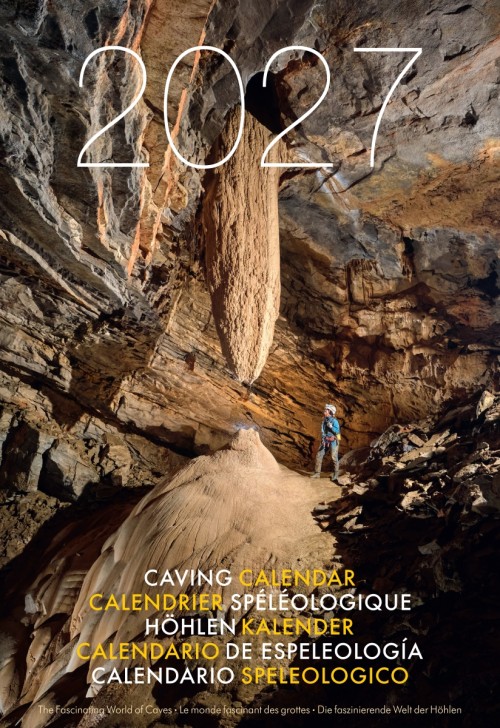
Speleo Projects features a selection of wild and touristic caves from around the world. The 12 monthly pages provide a glimpse into the caves of Ireland, France, Spain, Japan, Switzerland, Hungary, Slovenia, Vietnam and United States. All monthly pages with UV gloss varnish.